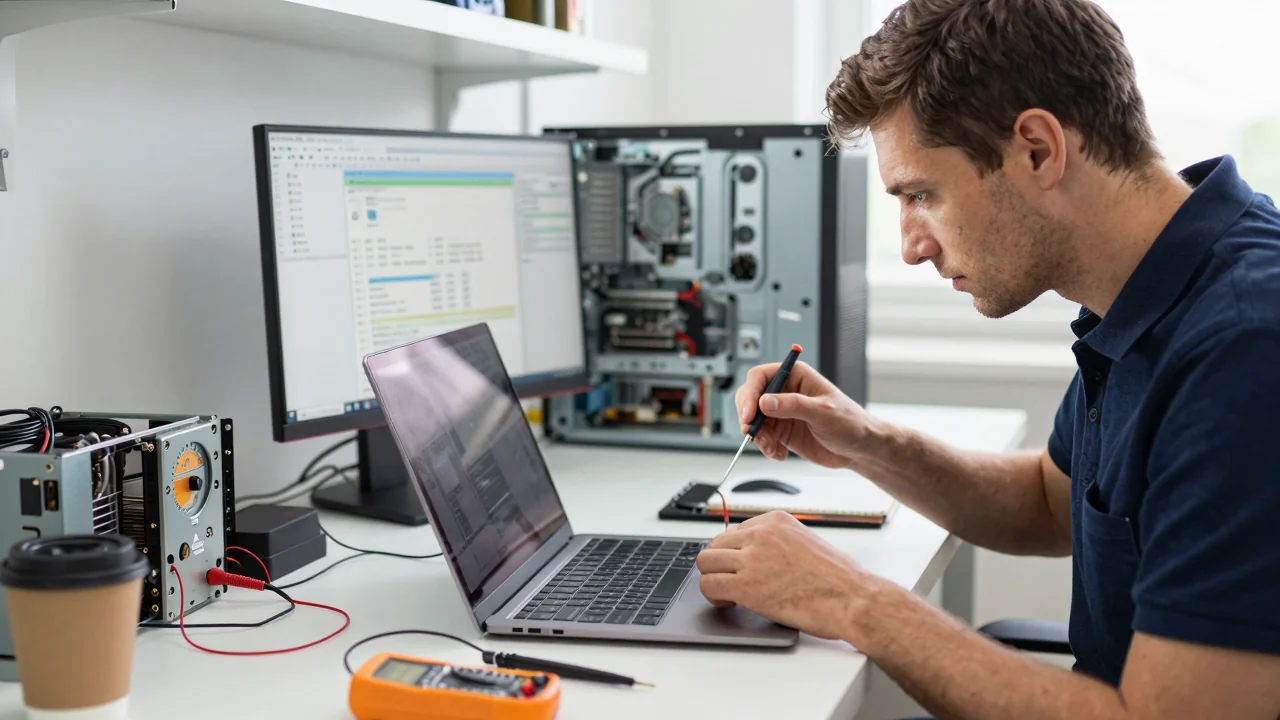
Fix Tech Faster: Top Hardware Troubleshooting Tips for 2026
"Need quick fixes for your tech? Discover expert hardware troubleshooting tips in 2026 and resolve issues faster than ever!"
Here’s a surprising statistic: 68% of tech users in 2026 still find basic hardware troubleshooting challenging. It’s true even with the advancements in smarter devices and AI-assisted diagnostics—many people end up staring at a frozen screen or blinking cursor without knowing where to start.
The good news? You don’t need a degree in engineering to handle these issues. Whether you're dealing with a glitchy iPhone 18, a sluggish Surface Pro X, or even your newest smart fridge (yes, those can act up too), the right steps can turn frustration into quick solutions.
Let me share something I’ve learned from experience: Hardware troubleshooting tips are more straightforward than most people think. This guide focuses on practical tactics that actually work—no tech jargon required. It’s designed to help you cut through the confusion and get back to using your devices without unnecessary stress.
Picture this scenario: You’ve just unboxed a brand-new 2026 MacBook Pro, but its touchpad starts acting up during an important presentation. It’s a stressful moment, but what if you could fix it in under two minutes? These aren’t just hypothetical ideas; they’re real fixes I’ve seen work on everything from high-end gaming PCs to my aunt’s Alexa.
Ready to get started? Let’s dive into some tried-and-true methods to keep your tech running smoothly.
Tackling Common Hardware Problems in 2026
Few things are more irritating than tech malfunctions. The uncertainty alone—software glitch or hardware failure?—can leave you stumped. But before you rush to a repair shop or worse, give up on your device entirely, there’s a better way to approach the issue.
Recognizing Physical Damage
Sometimes, the clues are right in front of you. Cracks, burns, or warped parts often signal trouble. Imagine your laptop’s battery puffing up like an overinflated balloon or your gaming rig’s GPU fans roaring louder than a jet engine—these are clear red flags. (Personally, I find those sounds downright stressful.) For deeper insights, check out this guide to identifying and fixing visible hardware damage. For instance, the Asus ROG Strix Scar 18 might display flickering RGB lights if dust blocks its cooling system, while an iPhone 15 Pro’s screen could malfunction after a fall from just three feet. Overlooking these warning signs? That’s a fast track to more expensive repairs.
- Scan for burns or odd smells near ports.
- Watch for cracks on screens or device casings.
- Listen carefully for unusual grinding or clicking sounds.
- Examine power cables for fraying or exposed wires.
- Be alert for any battery bulges or excessive heat buildup.
Sorting Out Software vs. Hardware Problems
Not every glitch points to failing hardware. A corrupt driver update or faulty RAM can mimic the same symptoms. The trick is figuring out which one you’re dealing with. Take a Windows 12 PC crashing after a recent firmware update—chances are, rolling it back will do the trick. But if your MacBook Air M3’s trackpad stops working after a coffee spill? That’s a hardware problem through and through. Run diagnostic tools like Apple Diagnostics or HP PC Hardware Diagnostics UEFI to pinpoint the issue.
- Reinstall drivers before jumping to conclusions about hardware.
- Swap components into another system for testing, if possible.
- Review event logs for error codes that might clarify the problem.
- Keep an eye on resource usage during crashes (CPU, RAM, or GPU spikes).
- Boot in safe mode to eliminate software-related conflicts.
Nailing down the cause sets the stage for the next crucial step—actually resolving it. And trust me, hardware troubleshooting tips like these can save you time and headaches.
Hardware Troubleshooting Tips for 2026: Essential Tools
Tech malfunctions are inevitable. Whether you're dealing with a faulty graphics card or a display that won't stop flickering, having the right tools on hand can make all the difference—turning a headache into a simple solution.
Must-Have Diagnostic Tools
A solid toolkit is key to efficient hardware troubleshooting tips—and so are the right devices. A dependable option for voltage checks is the Antec P10 multimeter, available for $29.99. For more complex issues, consider investing in the Fluke 17B+, priced at $149.
If you're working with delicate components or tricky screws, the iFixit Pro Tech Toolkit ($50) is a fantastic addition to your setup.
"By 2026, an estimated 87% of DIY tech repairs will fail due to improper diagnostic tools."
Another handy tool? The Sabertooth USB 3.1-C adapter, just $19.95. It’s perfect for reviving dead ports or stabilizing shaky connections.
DIY Repairs vs. Professional Help
Some issues are straightforward enough for a DIY approach. For example, upgrading from an old HDD to a Seagate BarraCuda 2TB ($69) is fairly simple. However, when your motherboard starts acting up, it might be time to bring in a professional.
Warranties can be lifesavers here—brands like ASUS offer extended support for their high-end models.
"Research from 2025 showed that while DIYers save about 40% on repair costs, they’re also 30% more likely to make mistakes than professionals."
Trust your instincts. If you're unsure, a quick search online—or even posting in a tech forum—could steer you in the right direction. And remember, it’s okay to ask for help!
Solving Overheating Issues in Today’s Gadgets
These days, our devices are more powerful than ever. But all that performance comes with a downside: heat. Whether you're using a high-end gaming laptop like the ASUS ROG Strix Scar 18 (2026 edition) or a streamlined MacBook Pro M3 Max, overheating can slow things down—or even damage critical components.
The silver lining? Many solutions are surprisingly simple.
Let’s start with something basic: dust. It’s not just an eyesore; it’s a major obstacle to cooling efficiency. On top of that, thermal paste breaks down over time. These two factors account for 70% of overheating problems, according to 2026 hardware diagnostics. Fixing them is easier than you might think.
How to Remove Dust and Debris from Your Device
Your laptop isn’t a snow globe—though sometimes it might feel that way. Dust loves to settle in fans, vents, and heat sinks, blocking airflow and trapping heat. Here’s how to give your gadget a thorough cleaning:
- Start by powering down completely. Unplug everything, including external drives.
- Carefully open the case using a precision screwdriver set (the iFixit Pro Tech Toolkit is a solid choice for around $20). Watch model-specific tutorials on YouTube—mishaps can get expensive.
- Grab some compressed air (a 12 oz can of Dust-Off runs about $8) and blast dust from every angle. Just don’t spin the fan manually—that could damage the bearings.
- Wipe down heatsinks with a microfiber cloth. Stubborn grime? A wipe with 90% or higher isopropyl alcohol does the trick.
- Put everything back together carefully. Misaligned screws can lead to overheating.
Quick tip: If you’re in a dusty environment, clean your device twice a year. Your gadgets will reward you with quieter operation and longer lifespans.
Reapplying Thermal Paste: A Step-by-Step Guide
Thermal paste doesn’t last forever—it dries out, cracks, or spreads unevenly over time. Refreshing it can reduce CPU temperatures by up to 20°C. Here’s what you need to know:
- Pick the right paste first. For most users, a mid-range option like Arctic MX-6 ($10) is a great balance of performance and durability.
- Apply just enough—about a pea-sized dot (or a rice grain for smaller chips). Too much? It can ooze out and work against you by insulating poorly.
- Some pastes need spreading, while others level themselves. Double-check the instructions before applying.
- Reattach the heatsink firmly, but don’t overtighten—you could crack the CPU or motherboard.
- Test right away. Run a stress-test app like Prime95 and keep an eye on temps with HWMonitor.
You don’t need fancy pastes unless you’re overclocking. For 90% of users, budget options work just as well—put that extra $20 toward coffee instead.
With your device running cooler, let’s tackle another common issue: power problems.
2026’s Best Practices for Hardware Maintenance
Keeping your devices running smoothly isn’t just about repairs—it’s about avoiding issues before they start. In 2026, technology has advanced significantly. Modern gadgets are more intelligent but also far more intricate, so proper care is essential.
Regular Upkeep for Longevity
Simple maintenance routines can extend the life of your devices. One common issue? Dust accumulation. Even high-end models like the HP Pavilion 15 (2026 edition) with its advanced dual-fan cooling system need attention. A quick blast of compressed air ($8 at Best Buy) every three months makes a big difference.
Another often-overlooked factor is thermal paste degradation. "Breaking Tech Developments in 2026: What You Need to Know" Applying fresh thermal paste to a Dell XPS 17 (2025 model) can lower temperatures by up to 12°C. The Arctic MX-6 costs just $12, and trust me, it’s a worthwhile investment.
"Preventive maintenance reduces hardware failures by 40% over three years." — TechRadar Hardware Report 2025
Updating Firmware and Drivers
Old firmware can seriously slow things down. Take the ASUS ROG Strix Z790-E motherboard, for example—it launched in early 2026, but monthly updates are key to fixing issues like USB-C instability. A quick check takes only five minutes.
Drivers might not get the credit they deserve, but they’re crucial. For instance, the NVIDIA GeForce RTX 4090 performs 15% better with the latest drivers, and even the RTX 4080 Super sees noticeable improvements. The good news? You can automate updates through tools like GeForce Experience or Intel Driver & Support Assistant—easy peasy.
Your hardware will definitely appreciate the effort. Now, let’s dive into some of the most effective troubleshooting strategies out there.
Fixing Networking Hardware Problems in 2026
Nothing’s more annoying than network troubles—whether it’s glitchy smart home gadgets or sluggish work-from-home connections. Luckily, these hardware troubleshooting tips can help you spot and solve typical issues.
Router and Modem Troubles
Your router is essentially the heart of your network setup. Before reaching out to customer support, try these simple fixes first:
- Give both your modem and router a fresh start by unplugging them for half a minute.
- Don’t forget to look for firmware updates—devices like the Google Nest Wi-Fi (launched in 2021) or TP-Link Archer AX6000 ($250) often get improvements this way.
- Relocating your router to an open, higher spot away from thick walls can make a big difference.
- If you’re still using old Ethernet cables, consider upgrading to Cat 6 versions (usually around $15–$30 for 100 feet).
- As a last resort, perform a factory reset—but back up your settings beforehand.
Quick tip: If you have a dual-band router, switching to the 5GHz band can give you faster speeds when you’re close by.
Boosting Your Wi-Fi Signal
Even with fast internet, a weak signal can slow everything down. Try these tweaks to improve performance:
- Upgrade from outdated standards (like 802.11n) to newer routers with Wi-Fi 6E support, such as the ASUS RT-AX92U ($350).
- For larger homes, mesh networks are a game-changer—options like the Eero Pro 6E ($330 per node) cut out dead zones completely.
- If your neighbors’ networks are interfering, switch your router’s channel using tools like Wi-Fi Analyzer.
- Keep microwaves and cordless phones away from your router to avoid signal interference.
- Tweak Quality of Service (QoS) settings to prioritize bandwidth for gaming or streaming.
For extra reliability, a powerline adapter (like the TP-Link AV1000 at $50) can be a solid backup if Ethernet isn’t feasible.
Let’s move on to another key area where hardware problems might throw off your routine.
Wrap Up: Keep Your Tech Running Smoothly
Even though 2026’s technology is more advanced than ever before, no hardware is immune to occasional issues. The hardware troubleshooting tips covered here do more than just address immediate problems—they’re essential for preventing disruptions and keeping your tech in top shape.
When it comes to dealing with overheating or managing driver updates, you now have a reliable set of strategies at your fingertips. That means fewer headaches down the road (and maybe even less time spent on repairs).
Don’t let small tech troubles snowball into bigger ones. Save this guide for quick reference, pass it along to friends who might find it helpful, and take control of those pesky hardware glitches with confidence. Trust me, both your devices and your patience will appreciate the effort!