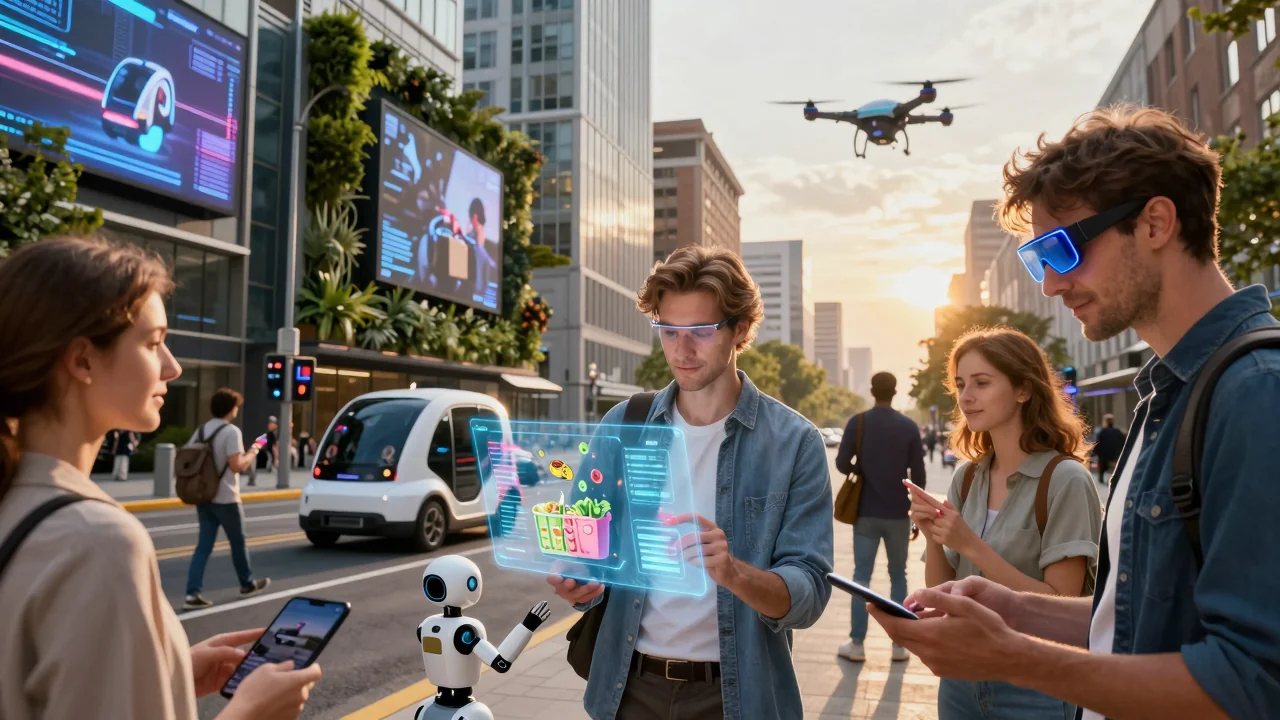
How Technology Is Reshaping Daily Life in 2026
Discover how technology is changing everyday life in 2026! Explore the latest innovations transforming daily routines and boosting efficiency now.
The idea that technology changing everyday life only involves smartphones and social media is outdated—seriously out of touch.
We’ve come a long way since 2016 or even 2020. These days, tech doesn’t just adjust our habits slightly. It’s completely transforming them. Imagine a refrigerator that automatically reorders your groceries before you’re about to run out, or a fitness tracker that monitors your sleep patterns and tweaks your wake-up time accordingly. Does this sound like something from a science fiction movie? In 2026, these things are commonplace.
Your home is now more intelligent than many recent college graduates.
Nest thermostats can learn your schedule quicker than you can set an alarm clock. AI assistants like Google’s new Gemini aren’t just responding to queries anymore—they anticipate what you’ll ask based on past interactions (is that unsettling or helpful?). And let’s not overlook Amazon’s autonomous delivery bots in Seattle, zipping along sidewalks as we relax with our morning coffee.
At this point, the debate isn’t whether technology is altering daily life. The real question is: how quickly can society adapt to these changes?
The Transformation of Smart Homes in 2026
The rapid evolution of smart homes over recent years is truly astonishing. Today, the phrase "technology changing everyday life" extends far beyond simple gadgets—it’s about creating intelligent environments that anticipate our needs.
Picture stepping into a home where lighting adapts to your emotions, the thermostat tailors itself to your habits, and your refrigerator restocks groceries before you even notice they’re running low. This isn’t science fiction; it’s reality in 2026. Smart homes have shifted from optional upgrades to indispensable living solutions.
Intelligent Living Environments
Modern smart homes function like finely tuned systems, thanks to advanced hubs such as the Samsung SmartThings Hub (4th gen) or the Amazon Echo Show 15 (3rd gen). These devices manage everything from security locks to kitchen appliances with ease.
For instance, the Nest Learning Thermostat (4th gen) does more than regulate temperature—it learns your routines over time, cutting energy use without compromising comfort. Meanwhile, Philips Hue Smart Bulbs (2026 edition) synchronize with your schedule, shifting colors to enhance focus or relaxation.
Curious about what’s driving the popularity of automated living?
- Self-empty robot vacuums like the iRobot Roomba j7+ ($899).
- Remote-controlled blinds such as Lutron Serena Shades (starting at $250 per panel).
- AI-powered security solutions including Arlo Pro 4 Spotlight Camera ($349.99) with instant alerts.
- Self-cleaning ovens like the Bosch 800 Series featuring Pyrolysis mode ($3,199).
- Adaptive lighting from C by GE that adjusts brightness based on natural light levels.
These breakthroughs aren’t just about convenience—they’re setting new standards for modern living. The real question is when, not if, you’ll embrace them.
Sustainability Through Smart Technology
Perhaps the most exciting development in smart home tech is its ability to reduce energy waste. Systems like the Ecobee Smart Thermostat Premium ($299) use AI to analyze usage patterns and slash electricity costs by up to 26%. Even minor adjustments, such as the Google Nest Mini (3rd gen) optimizing audio playback for room acoustics, make a noticeable difference over time.
Then there’s the latest in solar technology. Tesla’s Powerwall 3 ($10,500), when paired with SunPower Maxeon panels (starting at $2.98 per watt), can transform your home into an energy-efficient haven. Some of these upgrades even cover their own costs within a few years—hard to argue against that!
Check out some top energy-saving smart home enhancements today:
- The Sense Energy Monitor ($299) tracks power usage by individual devices.
- Smart plugs like the TP-Link Kasa EP10 ($24.99) schedule appliances for off-peak operation.
- The Brilliant Control Smart Home Switch ($299) combines lighting, security, and entertainment in one panel.
- Water-efficient faucets such as the Moen Flo Smart Faucet ($399), which minimizes usage while maintaining performance.
- Cutting-edge insulation from ICYNENE that cuts heating and cooling costs by up to 40%.
As groundbreaking as these home innovations are, they’re just the tip of the iceberg when it comes to how technology is revolutionizing our daily lives. Next, let’s explore what’s happening beyond our doorsteps.
How Artificial Intelligence Is Changing Workplaces
The impact of technology changing everyday life extends far beyond smartphones and smart homes—it's revolutionizing how we work. Today’s offices feel like they’ve jumped straight from a sci-fi novel into reality. AI assistants take over scheduling, predictive analytics help predict business trends, and chatbots handle customer service without pausing for breaks. The transformation is nothing short of remarkable.
Just think about how much has changed in recent years. Not long ago, "working remotely" meant struggling through fuzzy conference calls with distorted audio. These days, platforms like Microsoft Teams and Zoom work effortlessly alongside AI-powered transcription services. Missed a meeting? AI-generated summaries appear in your inbox almost instantly—talk about convenience.
According to a 2025 Gartner report, 75% of organizations using AI-driven workflow automation reported a 30% boost in productivity by 2026. That’s not just an efficiency upgrade; it’s a full-scale revolution in how work gets done.
AI-Powered Productivity Tools
AI has moved beyond being a trendy buzzword—it’s now the backbone of modern offices. Take Notion AI, for example (starting at just $10 per user each month). This tool drafts emails, suggests refinements, and even creates meeting agendas based on past discussions. Meanwhile, Microsoft Copilot Pro ($30 a month) syncs with Office 365 to analyze data patterns and generate reports automatically.
Here’s the real win: these tools get smarter over time. They pick up on your writing style, predict what you’ll need next, and cut down on those monotonous repetitive tasks. A digital assistant that remembers how you organize presentations or format spreadsheets? Count me in. And if you’re looking for a quick distraction, casinode.win has got your back.
The Future of Remote Work
Remote work has shifted from a passing fad to a lasting staple—and AI is the driving force behind it. Take Slack, for instance: its built-in AI chatbots now schedule meetings, recap conversations, and highlight urgent messages. Meanwhile, virtual reality tools like Meta Horizon Workrooms (free for basic use) let teams collaborate in immersive 3D environments.
Gone are the days of endless email chains or clunky project management tools. The modern remote work setup thrives on real-time teamwork, AI-powered insights, and technologies that make distance feel irrelevant. The question isn’t whether this is the future—it’s how quickly businesses can adjust to these changes.
This smooth integration of technology into our daily routines makes me wonder: what’s next for our personal lives?
Health Tech Innovations in 2026: A Personalized Approach to Wellness
Technology changing everyday life extends far beyond smartphones and smart homes. By 2026, health tech has reshaped self-care with groundbreaking developments in personalized medicine and wearables.
Smarter Diagnostics Thanks to AI
Picture a future where diagnoses arrive faster and with fewer mistakes—AI-powered diagnostics have made that possible. The updated IDx-DR system, for example, now analyzes retinal scans more effectively, reducing diabetic retinopathy misdiagnoses by 30%. Other notable advancements include:
- DeepMind Health’s AI models, which identify sepsis risk hours before symptoms develop.
- PathAI’s algorithms, boosting cancer detection accuracy by 15% compared to conventional methods.
- The affordable Butterfly iQ+, a $2,500 portable ultrasound device offering AI-assisted imaging for under $300.
- Wearable ECG monitors like the Apple Watch Series 9, which now detects irregular heart rhythms with an impressive 97% accuracy.
These breakthroughs improve healthcare efficiency and expand access for those who lack specialist care. Plus, they slash costs—fewer unnecessary tests mean fewer hospital visits, a definite plus for everyone involved.
The Next Generation of Health Wearables
Wearable tech has evolved from basic step counters into sophisticated health monitors. Boost PC Performance in 2026: Easy Tips to Speed Up Your Computer Today’s devices track sleep quality, blood oxygen levels, and more in real time. For instance, the Whoop 5.0 ($30/month) assesses recovery metrics and suggests workout times based on your body’s readiness.
The Oura Ring Gen4 ($299) is another standout, offering insights into heart rate variability, temperature shifts, and even predicting illnesses before symptoms appear. Meanwhile, the Garmin Venu 3 ($450) has added advanced hydration tracking and stress management tools to its lineup.
But here’s the real game-changer: these wearables now act as proactive wellness coaches. They nudge you when activity levels drop, remind you to drink water, or guide you through relaxation exercises—like having a mini health advisor on your wrist or finger.
Health tech in 2026 is revolutionizing how we manage illness and maintain well-being alike. And if the current pace of innovation continues, the next big leap might be just around the corner.
Transportation Revolution: Autonomous Vehicles & Smart Cities
Picture this: You’re running late for a meeting, but instead of white-knuckling it through rush-hour traffic, you simply summon your Tesla Model Y (now fully autonomous with the 2026 software update) from your phone. No parallel parking stress, no honking frustrations—just a smooth ride while you catch up on emails.
The technology changing everyday life isn’t just about convenience anymore; it’s redefining safety and efficiency too. The National Highway Traffic Safety Administration reported a 30% drop in fatal crashes since autonomous vehicles became mainstream. Why? Algorithms don’t get distracted or drowsy.
"By 2026, 40% of urban households will own or regularly use self-driving cars, transforming how we think about personal mobility." — McKinsey & Company
Self-Driving Cars in 2026
Autonomous vehicles are no longer a sci-fi fantasy. The latest Waymo Via models, for example, cost around $50,000 but offer Level 4 autonomy—meaning they handle all driving tasks in most conditions. Need to run errands? Your car can drop you off and park itself. Commuting daily? Ride-sharing services like Uber’s autonomous fleet are now cheaper than owning a conventional car.
The real game-changer? Reduced congestion. Cities like Los Angeles have seen traffic delays cut by 25% since autonomous vehicles sync with smart traffic signals. Imagine that—no more idling in gridlock while your car whispers, “Rerouting for optimal speed.”
The Growth of Smart City Infrastructure
Smart cities aren’t just buzzwords anymore; they’re tangible networks of sensors, data, and AI working together. Take Singapore’s integrated urban mobility system: real-time traffic lights adjust based on pedestrian crossings and vehicle flow. Even sidewalks have embedded solar panels now, generating power while you walk.
Sustainability is the secret sauce here. Copenhagen aims to be carbon-neutral by 2030, and its smart infrastructure—like electric bus lanes and AI-optimized waste collection—is paving (pun intended) the way. Small steps, like trash bins that compress waste remotely or streetlights that dim when no one’s around, add up fast.
So how does this shift in transportation lead us to the next big change in daily life? Let’s explore how these innovations ripple into something even more personal—our homes.
Social Media & Digital Communication in the 2026 Era
Back when logging into Facebook felt like a rare treat? Those days have faded into nostalgia. Technology changing everyday life has soared to unprecedented levels, particularly in how we engage with one another.
Today, social media transcends passive scrolling—it’s about immersive experiences. With VR headsets like the Meta Quest 4 ($599) and Apple Vision Pro 2 ($3,499), virtual meetups now rival the authenticity of an in-person coffee date. Why bother traveling when you can share a virtual pizza with friends in Paris from your living room? The convenience factor alone is hard to ignore.
The innovation doesn’t end there. Artificial intelligence has become every creator’s dream assistant, whether crafting selfies or producing short films. Platforms such as Adobe Firefly and Runway ML have made high-quality visuals accessible without needing formal design training.
Virtual Reality Social Platforms
Slip on your VR headset, and suddenly you’re transported to a virtual concert with friends, a beachside conversation, or even an intimate book club—all from the comfort of home. Platforms like Meta’s Horizon Worlds and Decentraland have turned these ideas into everyday realities.
But these spaces serve more than entertainment purposes. Professionals hold meetings there, students attend lectures, and artists exhibit work in 3D galleries. The level of immersion is so compelling that many users find themselves feeling more present in VR than during traditional video calls.
Some standout features driving this shift include:
- Real-time avatars with AI-powered lifelike expressions.
- Haptic feedback gloves ($299 for the TactGlove model) that simulate tactile sensations in virtual environments.
- Cross-platform accessibility, allowing iPhone users to join Meta events without switching devices.
- Voice modulation tools for real-time avatar voice adjustments.
- Integrated multiplayer mini-games, such as chess or trivia, within social platforms.
The outcome? Social media has evolved beyond digital interaction—it’s now an immersive experience. And the cherry on top? These technologies grow increasingly affordable each year.
The Impact of AI on Content Creation
Creating polished content no longer requires expensive software or extensive training. Artificial intelligence has leveled the playing field, empowering anyone to produce professional-grade posts with ease.
Consider Canva’s Magic Design tool, for instance. It can transform rough sketches into refined graphics in moments. Meanwhile, Jasper AI’s latest update generates full scripts from a single prompt. Even photography has advanced—Adobe Lightroom’s Auto Tone feature now adjusts lighting and color balance automatically.
But the true standout? Personalized content recommendations. Platforms now analyze your past posts to suggest optimal posting times, hashtags, and even tailored editing styles. It feels like having a marketing team at your fingertips.
A few AI tools reshaping digital communication include:
- Synthesia for AI video generation starting at $30/month.
- Descript, which automates podcast transcriptions.
- DALL·E 3 ($15/month) for custom illustrations.
- Riffusion, turning text into realistic audio clips.
- Lumen5, converting blog posts into short videos.
With these advancements, the standard for engaging content keeps climbing—and so do expectations. The challenge now? Keeping pace with rapid developments.
As we explore how technology is reshaping communication, let’s pivot to another area where innovation is making waves: productivity and work habits.
The Future Is Now: Embracing Technology Changing Everyday Life
It’s 2026, and by now, everyone recognizes that "technology changing everyday life" isn’t just hype. It’s our daily experience.
Imagine AI assistants predicting your needs before you speak a word or cities using real-time data to manage traffic more efficiently. These aren’t luxuries anymore. They’re fundamental parts of how we live today.
We hardly notice them, though. That’s the mark of great tech—it becomes so integrated that we take it for granted. And honestly? This is just the starting point.
The next wave will push boundaries even further, making the digital and physical worlds harder to tell apart. Exciting stuff ahead!
Want to explore how these changes are impacting your routine? Keep an eye out—there’s plenty more where this came from!