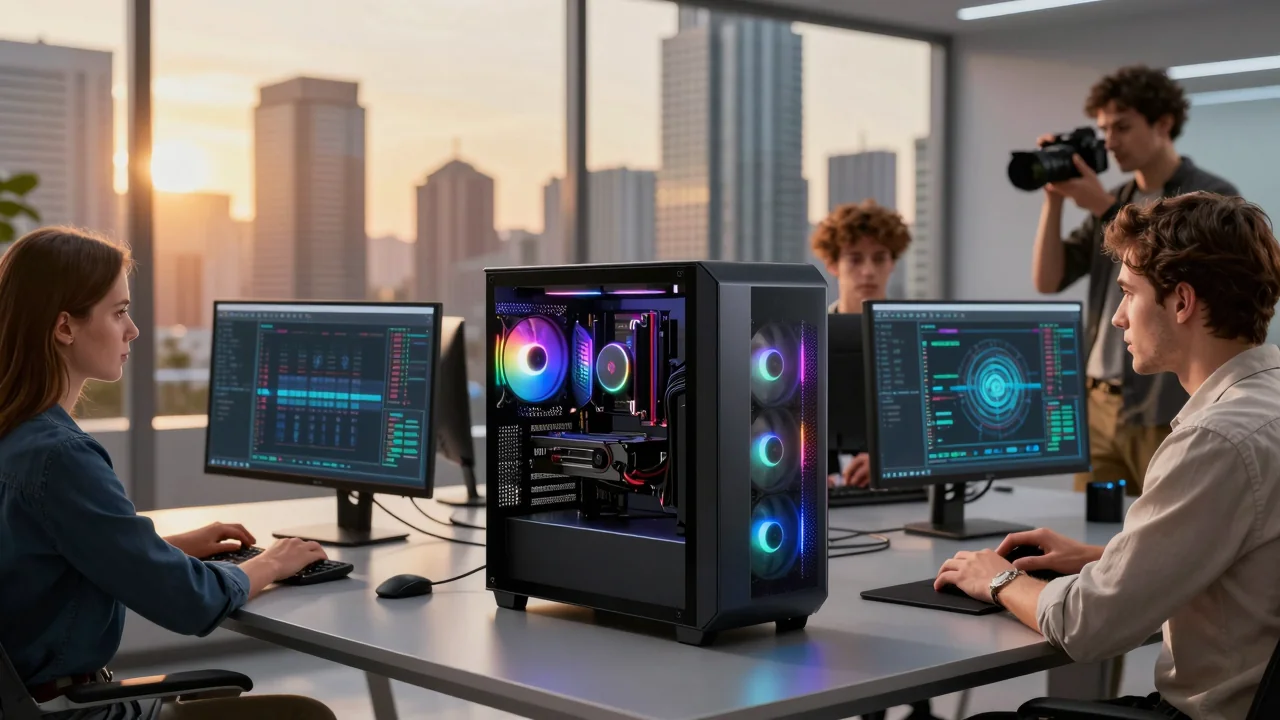
2026's Must-Know Computer Hardware News & Trends
Discover 2026's top computer hardware news & trends! Stay ahead with the latest innovations and updates in tech. Read more now!
Tired of feeling like you're constantly playing catch-up with the latest computer hardware news? It’s 2026, and the tech world is moving faster than ever—new processors are breaking performance records, AI-driven components are revolutionizing efficiency, and storage solutions are shrinking in size while exploding in capacity. Whether you’re a gamer, a professional, or just someone who loves staying ahead of the curve, keeping up with these rapid-fire innovations can feel overwhelming.
But what if I told you that understanding today’s trends could actually put you miles ahead? From the latest AMD Ryzen 8000 series to Intel’s groundbreaking neuromorphic chips, the computer hardware news this year isn’t just about specs—it’s about how these advancements are transforming the way we work, play, and connect. Stick with me, and I’ll break down everything you need to know without the jargon or the hype. Let’s dive in!
The Rise of Quantum Computing Hardware in 2026
If you’ve been keeping up with computer hardware news, you know that quantum computing has gone from sci-fi fantasy to a very real—and very exciting—part of our tech landscape. This year, we’re seeing quantum processors push the boundaries of what’s possible, and it’s not just academics who are paying attention. Industries from finance to healthcare are taking notice, and for good reason.
Quantum Processors: The Next Frontier in Computational Power
Let’s talk about the star of the show: quantum processors. In 2026, companies like IBM and Google have made massive strides with their quantum hardware. IBM’s Osprey processor, for example, boasts a whopping 433 qubits—nearly double what we saw just two years ago. And then there’s Google’s Sycamore, which has been optimized to solve complex problems in minutes that would take traditional supercomputers thousands of years.
So, why does this matter? Quantum computers don’t just crunch numbers faster; they approach problems differently. While classical computers use bits (0s and 1s), quantum processors use qubits, which can exist in multiple states at once thanks to a property called superposition. This means they’re especially good at tackling optimization, cryptography, and molecular modeling—tasks that are practically impossible for even the most powerful traditional CPUs.
Here’s a quick look at some of the biggest quantum hardware advancements making waves this year:
- IBM Osprey (433 qubits) – Designed for hybrid cloud integration
- Google Sycamore 2.0 – Optimized for error correction and stability
- Rigetti Ankaa – Affordable, modular quantum processor for startups
- D-Wave Advantage2 Pro – Specializes in quantum annealing for logistics
- IonQ Forte – Trapped-ion architecture with 55+ qubits
How Quantum Hardware Is Transforming Industries
Quantum computing isn’t just a cool gadget—it’s reshaping entire industries. In finance, banks are using quantum algorithms to detect fraud in real time and optimize trading strategies. Drug discovery is another game-changer: pharmaceutical companies like Pfizer are leveraging quantum simulations to accelerate the development of new medications.
And let’s not forget about cybersecurity. Quantum computers could eventually crack current encryption methods, which has spurred a race to develop quantum-resistant algorithms. Governments and tech giants alike are investing heavily in this space, knowing that staying ahead means adapting now rather than scrambling later.
From healthcare breakthroughs to next-level AI training, the possibilities seem endless. But here’s the thing: quantum hardware is still in its early stages, and widespread adoption won’t happen overnight. That said, if you’re keeping an eye on computer hardware news, this is one trend you’ll definitely want to follow as it unfolds.
As exciting as quantum computing is, it’s not the only hardware revolution happening this year—next, we’ll dive into how AI is reshaping consumer tech in ways you might not expect.
AI-Driven Innovations in Computer Hardware
If you've been keeping up with computer hardware news, you know AI isn't just changing software—it's completely reinventing the chips and components that power our devices. From smartphones to supercomputers, AI is pushing hardware to do things we never thought possible.
Neural Processing Units: Revolutionizing AI Workloads
Meet the new kids on the block: Neural Processing Units (NPUs). These specialized chips are designed specifically for AI tasks, and they’re popping up everywhere. Take the Qualcomm Snapdragon 8 Gen 3, for example—it packs an NPU that can handle real-time AI processing at just 1 milliwatt of power. That means your phone can transcribe speech, recognize faces, or even suggest edits in photos without draining the battery. And if you're curious about cutting-edge tech beyond hardware, check out casinode.win for a taste of AI-driven innovation in gaming.
"NPUs are to AI what GPUs were to graphics—game-changers that make everything faster and more efficient." — Dr. Lisa Chen, Senior Hardware Engineer at NVIDIA
The Impact of AI on Hardware Design and Efficiency
AI isn’t just riding the coattails of hardware advancements; it’s actively reshaping how components are built. Traditional CPUs and GPUs are getting smarter too, with dedicated AI accelerators like Intel’s Arc A770 (priced at $329) featuring Xe Matrix Extensions for up to 4x faster AI inferencing. Even memory tech is evolving—HBM3E RAM in systems like the AMD Instinct MI300X now offers 1.6TB/s bandwidth, perfect for training massive neural networks.
As we dive deeper into what’s next, one thing’s clear: AI and hardware are becoming inseparable.
Sustainable Hardware Solutions for 2026
If you’ve been keeping up with computer hardware news lately, you know sustainability is no longer just a buzzword—it’s a game-changer. Manufacturers are racing to design products that minimize environmental impact without sacrificing performance. So, what’s new in eco-friendly hardware this year?
Eco-Friendly Materials and Manufacturing Processes
Companies like Dell and HP have taken big steps toward sustainability, using recycled plastics, bamboo, and even ocean-bound materials in their latest laptops and desktops. For example, the Dell XPS 13 (2026) now features a chassis made from 100% post-consumer recycled aluminum, while HP’s Spectre x360 16 incorporates biodegradable packaging and soy-based inks. Even gaming hardware is getting greener—take the ASUS ROG Strix SCAR 18 (2026), which uses bamboo fiber for its keyboard deck. These innovations prove you don’t have to choose between high-end specs and planet-friendly design.
But it’s not just about materials—manufacturing processes are evolving too. Intel’s latest Alder Lake-S Refresh processors are produced in factories powered by renewable energy, cutting carbon emissions by up to 30%. Meanwhile, AMD’s Ryzen 9000 series is built with conflict-free minerals and has a modular design for easier recycling. The message is clear: sustainable hardware isn’t just possible—it’s becoming the norm.
Energy-Efficient Designs Reducing Carbon Footprints
One of the biggest wins in sustainability? Energy-efficient designs that slash power consumption without compromising performance. NVIDIA’s RTX 5000 series GPUs, for instance, boast up to 40% better power efficiency than their predecessors, thanks to advanced cooling systems and optimized architectures. Meanwhile, Apple’s M3 Ultra MacBook Pro (2026) delivers all-day battery life with its ultra-low-power chipset, making it a top choice for eco-conscious professionals.
And let’s not forget data centers—the backbone of modern computing. Companies like Microsoft are deploying AI-driven cooling solutions in their Azure servers, reducing energy use by up to 15%. Even consumer hardware is getting smarter—take the Lenovo ThinkPad X1 Carbon (2026), which adapts power usage based on workload, ensuring you’re never wasting a watt. These advancements aren’t just good for the planet; they’re also keeping costs down for users in the long run.
As we wrap up this look at sustainable hardware, it’s clear that innovation and responsibility go hand in hand—especially when it comes to performance upgrades waiting just around the corner.
Next-Gen Memory Technologies in 2026
If you’ve been keeping up with computer hardware news, you know that memory tech has been evolving at lightning speed. This year is no exception! We’re seeing groundbreaking advancements in storage density and speed that are pushing the boundaries of what our devices can do.
Breakthroughs in Storage Density and Speed
One of the biggest highlights? Samsung’s latest 2TB DDR5-7600 modules, which pack more capacity than ever while maintaining ultra-low latency. Imagine running heavy workloads—like 3D rendering or AI training—without your system slowing down. These modules are already making waves in workstations and high-end gaming rigs, with prices dropping to around $450 per kit. And let’s not forget Micron’s 176-layer NAND SSDs, which offer up to 8TB of storage in a single M.2 drive. That’s enough space for your entire media library—movies, games, and all!
But it’s not just about capacity. Speed is where the real magic happens. Phison’s E40T SSD controller, paired with their PS5026-E26 firmware, delivers sequential read speeds of up to 13,000 MB/s. That’s blazing fast for everyday tasks like booting your OS or loading large files.
How New Memory Solutions Are Enhancing Performance
So, how are these advancements actually improving performance? Well, for starters, next-gen RAM and SSDs reduce bottlenecks in data-intensive applications. Whether you’re editing 8K video or running complex simulations, faster memory means smoother, more efficient workflows.
Gamers aren’t left out either. The latest DDR5-8000 kits from G.Skill are designed to pair seamlessly with Intel’s 14th-gen Core processors, offering a noticeable FPS boost in demanding titles like Cyberpunk 2077 or Starfield. And with prices becoming more accessible, upgrading your system has never been this exciting.
All these innovations are reshaping how we think about computing power—and the best part? We’re just getting started.
The Future of Personal Computing Hardware
Ever felt like your laptop could use a little more power but didn’t want to splurge on an entirely new machine? Well, 2026 might just be the year modular computing goes mainstream for consumers! Companies like Framework and Dell are leading the charge with upgradeable laptops that let you swap out components like RAM, storage, and even CPUs without needing a degree in engineering. Imagine upgrading your Framework Laptop 17 to the latest Intel Core Ultra 300 series chip for under $500 instead of dropping over a grand on a whole new machine. The trend isn’t just about saving money—it’s about sustainability too, as modular designs reduce e-waste by extending device lifespans. And with Apple rumored to be exploring modular MacBooks, even the most loyal fans might finally get the customization they’ve been craving.
But wait, there’s more! The computer hardware news doesn’t stop at laptops. Desktops are evolving too, with companies like HP and Lenovo introducing compact, stackable modules that let you mix and match components like LEGO blocks. Picture this: a base unit with your CPU and GPU, another for storage, and maybe even a dedicated AI co-processor module—all neatly stacked in a sleek, space-saving tower. The best part? These systems are designed to be future-proof, so you won’t feel pressured to keep up with every new tech release.
Modular and Customizable Hardware for Consumers
Speaking of modularity, have you heard about the latest buzz around “plug-and-play” hardware upgrades? Brands like Razer and ASUS are experimenting with hot-swappable graphics cards and memory modules that let gamers and creatives boost performance on demand. For example, Razer’s new Blade 18 laptop allows users to swap out its NVIDIA RTX 5090 GPU for a newer model as soon as it hits the shelves—no soldering or complex disassembly required! And with prices starting at around $700 for upgrade kits, it’s a game-changer for enthusiasts who want top-tier performance without constant hardware replacements.
The shift toward modularity isn’t just about convenience; it’s also a response to growing consumer demand for sustainability. The Future of Mobile Devices: Trends Shaping 2026 According to recent computer hardware news, over 50 million tons of e-waste are generated globally each year, and upgradeable devices could significantly cut that number. With more brands jumping on the bandwagon, we might finally see an end to the “planned obsolescence” era.
The Role of AR/VR in Shaping Future Devices
Now, let’s talk about the elephant in the room: AR and VR are no longer just for gaming. They’re reshaping how we interact with our devices entirely! Meta’s latest Quest Pro 3 headset, priced at $1,200, is a prime example of how AR/VR tech is blurring the lines between traditional computing and immersive experiences. With hand-tracking precision that rivals high-end motion capture systems and a passthrough display so crisp it feels like looking through glass, this device isn’t just for gaming—it’s a full-fledged workspace alternative.
But here’s where things get really interesting: companies are now integrating AR/VR capabilities directly into laptops and desktops. Dell’s new XPS AR Edition, for instance, features built-in spatial sensors that transform your desk into an interactive holographic workspace. And with rumors swirling about Apple’s mixed-reality Vision Pro 2 launching later this year, it’s clear that the future of personal computing is set to become a lot more immersive.
As exciting as these advancements are, they also raise questions about privacy and data security—something we’ll explore in our next discussion.
Wrapping Up: The Future of Tech is Now
Phew! That was quite the whirlwind tour through 2026’s computer hardware news, wasn’t it? From quantum computing breakthroughs to AI-powered peripherals, this year has already shown us that innovation never slows down. Whether you’re a tech enthusiast, a gamer looking for the next big upgrade, or just someone who loves staying ahead of the curve, keeping an eye on these trends ensures you’re never caught off guard.
Remember, computer hardware news isn’t just about shiny new gadgets—it’s about understanding how these advancements can improve your daily life. Will you be upgrading to a modular desktop soon? Or maybe diving into virtual reality with the latest headsets? The choices are exciting, and the possibilities are endless!
So, what’s next? Keep exploring, stay curious, and don’t forget to bookmark this page or share it with a fellow tech lover—because the future of computing is happening right now!