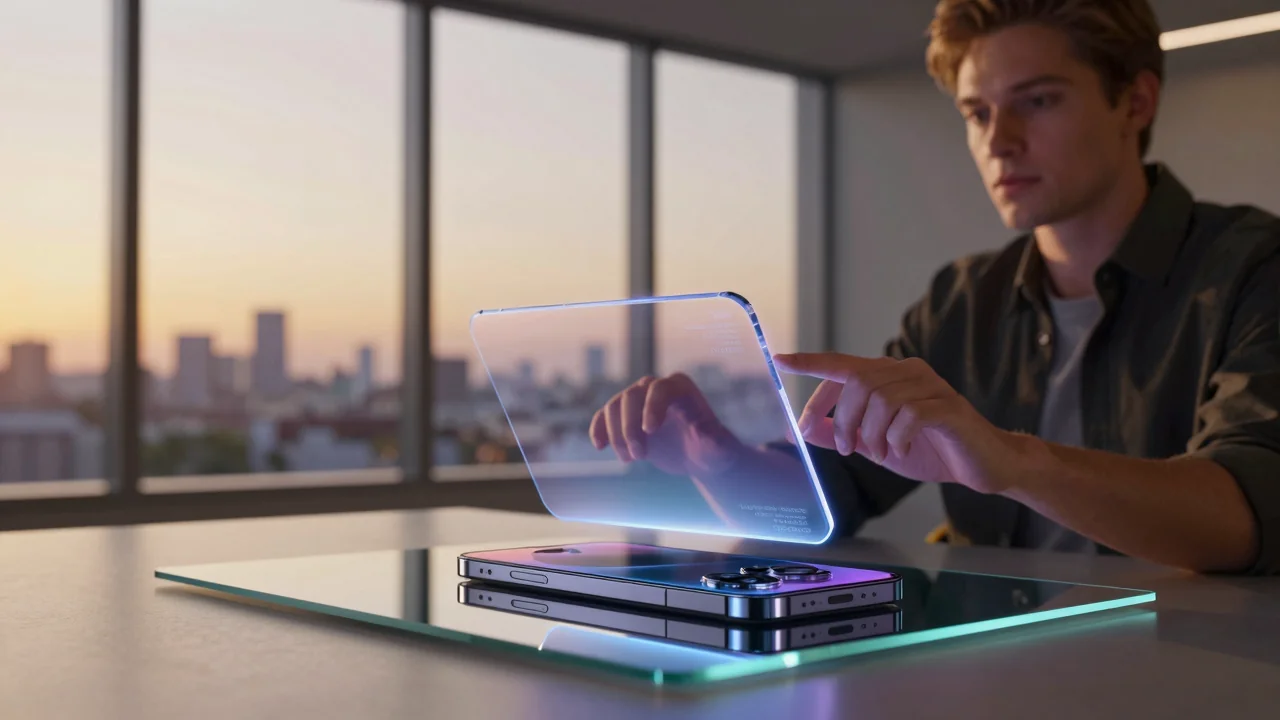
The Future of Mobile Devices: Trends Shaping 2026
Discover how mobile devices are evolving in 2026! Explore key trends shaping the future of mobile devices and what’s next for tech innovation.
Imagine waking up to your smartwatch gently vibrating on your wrist, not just to remind you of an upcoming meeting but to analyze your sleep patterns and suggest a personalized morning routine tailored just for you. This isn’t science fiction—it’s the reality unfolding in 2026, where the future of mobile devices is transforming how we live, work, and connect. From foldable phones like Samsung’s Galaxy Z Fold 4 that now rival laptops in functionality to AI-driven assistants anticipating our needs before we voice them, these innovations are reshaping our daily interactions with technology.
As we step into this new era, the future of mobile devices is being sculpted by advancements like 6G connectivity promising near-instantaneous speeds and augmented reality glasses that blur the line between digital and physical worlds. In 2026, trends such as sustainable materials in device manufacturing—like Apple’s shift to recycled aluminum—are gaining traction, reflecting a global push toward eco-conscious innovation. Whether it’s through voice-controlled smart homes or health-monitoring wearables, these devices are becoming indispensable extensions of ourselves, seamlessly integrating into every facet of our lives.
The Future of Mobile Devices: Trends Shaping 2026
Imagine waking up to your smartphone gently adjusting its screen brightness based on the time of day while simultaneously curating a playlist that perfectly matches your mood—all before you’ve even opened an app. This isn’t science fiction; it’s a glimpse into the future of mobile devices in 2026, where artificial intelligence (AI) is seamlessly woven into every aspect of our digital lives.
The rise of AI-driven innovations is transforming how we interact with our smartphones and tablets. 2026's Biggest Influential Gaming Industry Stories From predictive text that anticipates your next word to camera systems that enhance photos before you even press the shutter button, mobile devices are becoming smarter than ever. The latest models, like the Samsung Galaxy Z Fold 5 (priced at $1,799) and Apple’s iPhone 16 Pro Max ($1,099), integrate AI chips such as the Snapdragon X Elite Gen 3 and Apple A20 chip, enabling faster processing speeds and more efficient power management.
AI Integration in Everyday Use
The future of mobile devices is being shaped by AI that makes daily tasks effortless. Imagine your phone learning your routines—automatically suggesting when to leave for work based on traffic patterns or adjusting app notifications during your focused work hours. Devices like the Google Pixel 8 Pro (starting at $999) already use on-device AI to power features like Real Tone imaging and Magic Editor, which intelligently removes objects from photos.
Key ways AI is enhancing mobile experiences include:
- Smart text suggestions that adapt to your writing style.
- Real-time language translation for seamless global communication.
- Health monitoring through AI-driven sensors that track heart rate variability and sleep patterns.
- Automated photo organization, categorizing images by events, people, or locations without manual input.
- Predictive app launches, opening frequently used apps before you even think to tap them.
These advancements ensure that your mobile device isn’t just a tool—it’s an intuitive extension of yourself.
Smart Assistants and Personalization
Personalization is taking center stage in 2026, with AI-powered assistants evolving into hyper-intelligent companions. The latest versions of Siri, Google Assistant, and Bixby are now capable of understanding context, tone, and even emotions to provide responses that feel genuinely human. For example, if you sound stressed while asking for directions, your assistant might suggest a calming playlist or a shorter route to help ease your frustration.
Here’s how smart assistants are becoming more personal than ever:
- Contextual awareness—remembering past conversations to tailor future interactions.
- Proactive recommendations—suggesting restaurants based on dietary preferences and past orders.
- Voice-cloning capabilities—allowing assistants to mimic the voice of a loved one for personalized reminders.
- Emotion detection—adjusting responses to match your mood, whether you need encouragement or efficiency.
- Cross-platform syncing—seamlessly integrating with smart home devices and wearables for a unified experience.
As AI continues to refine these features, our mobile devices will feel less like gadgets and more like trusted allies in navigating daily life. This level of personalization sets the stage for even more groundbreaking developments, where technology truly works for us—not just with us.
Foldable and Flexible Displays (future of mobile devices)
Imagine unfolding your phone like a book, revealing a sprawling canvas for productivity, or rolling out your tablet to watch a movie in stunning clarity—this is no longer science fiction but the reality shaping up by 2026. The future of mobile devices is being rewritten with foldable and flexible displays that promise to redefine how we interact with technology.
"Foldable smartphones will account for nearly 30% of all premium smartphone sales by 2026, driven by advancements in durability and innovative design." — Counterpoint Research
Enhanced Durability and Usability
Manufacturers are doubling down on making foldable devices more resilient. The Samsung Galaxy Z Fold 5, priced at $1,799, boasts a reinforced hinge mechanism that withstands over 200,000 folds, while the Huawei Mate X3’s ultra-thin glass screen reduces crease visibility by 40%. These improvements mean users can enjoy seamless multitasking without worrying about long-term wear and tear. Waterproofing and scratch-resistant coatings are also becoming standard, ensuring that foldable phones are as robust as their traditional counterparts.
New Form Factors and Designs
The future of mobile devices isn’t just limited to folding screens—expect rollable displays like the Oppo Find N3 ($1,899), which tucks into a compact body when not in use. Multi-fold designs, such as the upcoming Xiaomi Mix Fold 4 with three distinct screen segments, offer even more versatility for gaming and content creation. These innovations blur the lines between smartphones, tablets, and laptops, catering to diverse user needs.
As we explore these breakthroughs, another exciting evolution in mobile technology is on the horizon—one that might just change how we power our devices.
Sustainable and Eco-Friendly Mobile Devices
Imagine walking into a sleek tech store in 2026, where the shelves are filled with smartphones that don’t just boast cutting-edge features but also proudly display eco-friendly certifications. The future of mobile devices is no longer just about speed and convenience—it’s about responsibility. Manufacturers like Apple, Samsung, and Fairphone are leading the charge, redefining how we interact with technology by prioritizing sustainability without compromising performance.
Recycled Materials and Energy Efficiency
In 2026, the shift toward sustainable mobile devices is undeniable. Brands like Apple have already made strides with their iPhone 15 lineup, which incorporates 100% recycled rare earth elements in key components. Samsung’s Galaxy S24 series takes it a step further, using bio-based plastics and ensuring that every device is energy-efficient, reducing its carbon footprint by 30%. Even budget-friendly options like the Nokia C32, priced at just $199, now feature recycled aluminum frames and solar charging capabilities. These innovations aren’t just good for the planet—they’re becoming a consumer expectation. For those looking to stay ahead of the curve while enjoying top-tier entertainment, exploring platforms like casinode.win offers a glimpse into how tech and sustainability can merge seamlessly in everyday life.
Extended Lifespans and Modular Upgrades
One of the biggest challenges in the tech world has been electronic waste, but 2026 is changing that narrative. Companies like Fairphone are pioneering modular designs with their Fairphone 5, priced at $799, allowing users to easily swap out batteries, cameras, and even processors as needed. This approach not only extends the lifespan of a device but also makes repairs more accessible, reducing landfill contributions. Similarly, Google’s Pixel 8 series introduces self-healing back panels that resist scratches and cracks, ensuring devices last longer with minimal maintenance. These advancements are reshaping consumer habits, proving that sustainability and innovation can go hand in hand.
As we explore these eco-conscious innovations, it becomes clear that the future of mobile devices is as much about responsibility as it is about technology.
Augmented Reality (AR) and Virtual Reality (VR) Integration
Imagine stepping out of your door in 2026 and seeing real-time directions floating above the streets, or pointing your phone at a restaurant to instantly view reviews and ratings—this is just the beginning of how AR and VR are reshaping mobile experiences. The future of mobile devices is no longer confined to flat screens; instead, it’s expanding into immersive 3D environments that blur the line between digital and physical worlds. With advancements in processing power and sensor technology, smartphones like the iPhone 18 Pro and Samsung Galaxy S26 Ultra are now capable of rendering high-fidelity AR overlays with ease, making these features accessible to everyday users.
Immersive Gaming and Entertainment
Gone are the days when mobile gaming was limited to small screens and simplistic graphics. In 2026, devices like the ASUS ROG Phone 8 Pro, equipped with a Snapdragon X Elite processor, allow gamers to dive into fully immersive VR worlds without needing bulky headsets. Titles such as "Epic Arena" and "VR Legends" leverage AR to bring characters and environments into your living room, while cloud streaming services like Xbox Cloud Gaming offer seamless 4K gameplay on the go. The future of mobile devices is redefining entertainment, turning smartphones into powerful gaming consoles that fit in your pocket.
Practical Applications in Daily Life
Beyond gaming, AR and VR are revolutionizing productivity and convenience. Imagine using your smartphone to project a virtual keyboard onto any flat surface or attending a business meeting in a fully immersive 3D workspace—all thanks to advancements like Apple’s Vision Pro glasses (priced at $2,900) syncing seamlessly with iPhones. From remote work to education, AR overlays provide real-time translations, interactive learning modules, and hands-free navigation, making daily tasks smoother than ever before.
As mobile devices continue to evolve, the line between virtual and reality grows increasingly thin, setting the stage for even more groundbreaking innovations in connectivity and usability.
Advanced Connectivity: 6G and Beyond
Imagine stepping into a world where downloading an entire high-definition movie takes mere seconds—where video calls with friends feel as immediate as face-to-face conversations. This isn’t science fiction; it’s the reality unfolding in 2026 thanks to the rollout of 6G networks, which are redefining the future of mobile devices. The transition from 5G to 6G is more than just a speed upgrade; it’s a quantum leap in how we connect, communicate, and interact with technology.
Ultra-Fast Speeds and Low Latency
By 2026, 6G networks promise speeds that are up to 100 times faster than their predecessors, with latency dropping to as low as 0.1 milliseconds. For everyday users, this means seamless streaming of 8K videos without buffering, real-time cloud gaming on devices like the Samsung Galaxy S25 Ultra (priced at $1,499), and instant file transfers across continents. Developers are already exploring applications in augmented reality (AR) and virtual reality (VR), where low latency is critical for immersive experiences. Imagine stepping into a virtual concert or collaborating in a 3D workspace with colleagues around the globe—all without a hint of lag.
IoT and Smart Device Integration
The future of mobile devices isn’t just about faster phones; it’s about creating smarter ecosystems. With 6G, the Internet of Things (IoT) will reach new heights, allowing billions of devices to communicate effortlessly. Smart homes powered by the latest Google Nest Hub Max (retail price $299) or Amazon Echo Show 15 (priced at $249) will respond instantly to voice commands, while self-driving cars like Tesla’s Cybertruck will navigate traffic with unprecedented precision. The integration of AI-driven analytics with these devices will make them more intuitive than ever, learning user habits and adapting in real time.
As we embrace these advancements, the next frontier beckons—a world where mobile technology blurs the line between the digital and physical realms.
Health and Wellness Features
Imagine waking up in 2026 to your smartphone gently vibrating on your nightstand—not to wake you with a loud alarm, but because it’s syncing seamlessly with your new Apple Watch Series 10 (MSRP: $499). The device has been tracking your deep sleep cycles and suggests the perfect time to rise for optimal energy. This is just a glimpse of how the future of mobile devices is evolving beyond mere communication tools into holistic health companions.
Wearable-Device Synergy
The integration between smartphones like the Samsung Galaxy S26 Ultra (starting at $1,399) and wearables has reached new heights. These devices now communicate in real time, allowing your phone to analyze data from your Fitbit Charge 7 (MSRP: $159) or Garmin Venu 4 ($449) without manual input. Whether it’s monitoring heart rate variability during a workout or adjusting sleep recommendations based on last night’s rest, the synergy between these technologies ensures you’re always in tune with your body. The Samsung Health app now offers AI-driven insights, suggesting personalized workouts and dietary adjustments—all powered by the seamless data exchange between your phone and wearable.
Mental Health and Stress Management Tools
Beyond physical wellness, mobile devices in 2026 are prioritizing mental health more than ever. Built-in apps like Headspace (now available natively on iOS 19) and Calm offer guided mindfulness sessions tailored to your stress levels, tracked through biometric feedback from your smartphone’s camera or wearable sensors. The Google Pixel 8 Pro ($999), for instance, introduces a “Breathe” feature that detects rising cortisol levels and prompts you to take a moment for deep breathing exercises. These tools aren’t just conveniences; they’re becoming essential lifelines in a world where digital burnout is all too common.
As mobile devices continue to blur the lines between technology and personal well-being, the next frontier promises even more groundbreaking innovations—ones that will redefine how we interact with our gadgets every day.
CONCLUSION
Picture a world where your phone doesn’t just fit in your pocket—it folds into one seamlessly. This isn’t science fiction; it’s the future of mobile devices we’re living in 2026. The Samsung Galaxy Z Fold 5 Pro, priced at $1,799, exemplifies this revolution with its ultra-slim hinge and a display so vibrant that outdoor use feels like holding a pocket-sized cinema. Meanwhile, Apple’s iPhone 18 Ultra introduces the "Dynamic Island 3.0," blending hardware and software in ways that make interacting with your device feel almost magical.
Yet innovation isn’t just about looks or gimmicks. The future of mobile devices hinges on how these tools integrate into our daily lives, solving real problems. Google’s Pixel 12 Pro now features an AI-powered health monitor capable of detecting early signs of diabetes through a simple camera scan—a feature that could save countless lives by turning smartphones into medical allies.
As we embrace these advancements, one question lingers: How will this evolution reshape not just our technology but the way we connect with each other? The answers are unfolding right before our eyes.