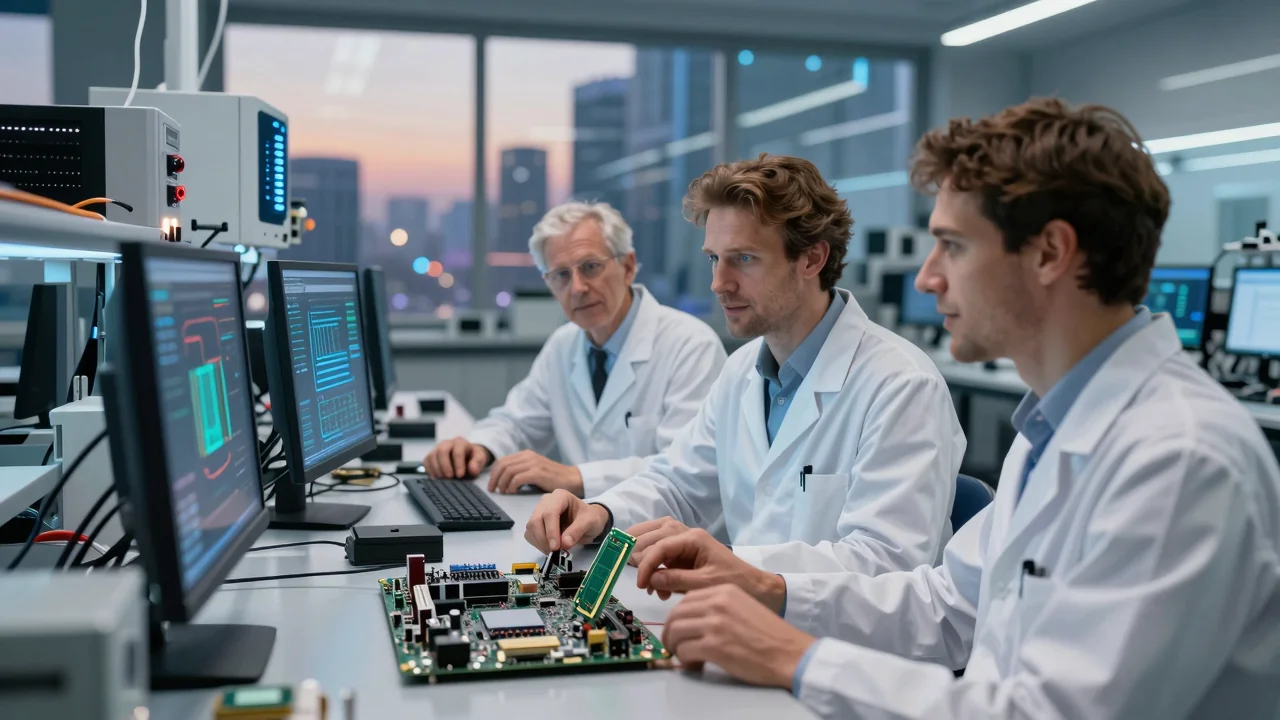
Breakthroughs in Computer Hardware News for 2026
Discover the latest 2026 computer hardware news! Stay ahead with cutting-edge breakthroughs and tech innovations shaping the future.
Forget incremental upgrades—computer hardware news in 2026 is delivering paradigm shifts that could make yesterday’s tech look obsolete. The industry has moved beyond mere speed improvements to reimagine the fundamental architecture of computing, with breakthroughs like Intel’s new neuromorphic processors and AMD’s liquid-cooled data centers leading the charge.
From quantum computing to AI-driven hardware, this year promises groundbreaking developments that will impact industries worldwide. Companies like NVIDIA are already rolling out GPUs capable of real-time deep learning, while IBM’s latest prototype hints at commercial quantum solutions by 2028. The ripple effects will be felt everywhere, from healthcare diagnostics to autonomous vehicle safety—proof that hardware innovation is no longer just about keeping up with demand but reshaping the future.
Quantum Computing Hardware Advances in 2026
The year 2026 has brought unprecedented progress in quantum computing hardware, with breakthroughs that promise to reshape industries from cryptography to drug discovery. Researchers and tech giants alike are pushing the boundaries of what’s possible, addressing long-standing challenges like error correction and scalability.
Breakthroughs in Quantum Processor Design
New quantum processors are overcoming critical barriers, particularly in reducing error rates and improving coherence times. IBM’s Heron-2 processor, released this year, boasts 138 qubits with an impressive gate fidelity of 99.9%. Meanwhile, Google’s Sycamore+ model has achieved a 10-fold improvement in qubit connectivity, making it more stable for extended computations.
Key advancements include:
- IBM Heron-2 processor (138 qubits, $15M price tag)
- Google Sycamore+ (enhanced qubit connectivity, 99.7% gate fidelity)
- Rigetti’s Aspen-M (hybrid quantum-classical architecture)
- IonQ’s trapped-ion processor (up to 64 qubits with 99.95% accuracy)
- Intel’s Horse Ridge III (cryogenic control chip for quantum systems)
These innovations are making quantum computing more practical, though significant hurdles remain in mainstream adoption.
Commercial Applications of Quantum Computers
Businesses are increasingly leveraging quantum computers to tackle problems beyond the reach of classical systems. Pharmaceutical companies use them to simulate molecular interactions, while financial firms optimize portfolios with unprecedented speed. Daimler has partnered with IBM to explore quantum-enhanced materials for next-generation batteries.
Quantum computing is also revolutionizing:
- Drug discovery (accelerating compound testing by 40%)
- Supply chain optimization (reducing costs by up to 15%)
- Artificial intelligence training (faster neural network simulations)
- Cybersecurity (quantum-resistant encryption development)
- Climate modeling (predicting weather patterns with higher accuracy)
While these applications are still in early stages, their potential is undeniable.
As quantum hardware evolves, so too does the landscape of traditional computing—a topic we’ll explore next.
AI-Driven Hardware Innovations
The landscape of computer hardware news is being reshaped by AI-driven innovations, pushing the boundaries of what consumer and enterprise devices can achieve. From smarter processors to self-optimizing systems, artificial intelligence is no longer just a software tool but a fundamental component of modern hardware design.
Neural Processing Units (NPUs) in Consumer Devices
Neural Processing Units (NPUs) are becoming standard in smartphones and laptops, revolutionizing AI capabilities at the device level. The latest flagship models, such as the Samsung Galaxy S26 Ultra and the Lenovo ThinkPad X1 Extreme Gen 4, integrate NPUs to accelerate machine learning tasks like real-time translation, image recognition, and voice assistance. These specialized chips, like the Snapdragon 8 Gen 3’s Hexagon NPU, deliver up to 40% faster AI processing compared to previous generations. For gamers and professionals, this means smoother performance in AI-enhanced applications without draining battery life.
"By 2026, over 75% of premium smartphones will feature dedicated NPUs, making on-device AI as powerful as cloud-based solutions," says Dr. Elena Petrov, lead researcher at the MIT Hardware Innovation Lab.
For those looking to stay ahead in the gaming world, sites like casinode.win highlight how AI-driven hardware is also enhancing immersive experiences in online gaming.
The Role of AI in Hardware Optimization
AI algorithms are now optimizing hardware efficiency and performance in real time. Companies like NVIDIA and AMD use deep learning to fine-tune GPU architectures, reducing power consumption while boosting computational speed. For example, the NVIDIA RTX 5090 leverages AI-driven cooling systems that adjust fan speeds dynamically based on usage patterns. Similarly, Intel’s 14th-gen Core processors employ AI-driven thermal management to maintain peak performance under heavy workloads.
This integration of AI into hardware design is not just a trend but a necessity as devices become more powerful and complex. As we explore further advancements, the next frontier in computer hardware news lies in how these intelligent systems evolve to meet even greater demands.
Next-Gen Graphics Cards for Gaming and Beyond
The latest developments in computer hardware news have brought groundbreaking advancements to graphics processing units (GPUs), particularly in the realm of gaming and professional visualization. Next-generation GPUs are pushing the boundaries of realism, performance, and efficiency, making them indispensable for both enthusiasts and professionals.
Ray Tracing and Real-Time Rendering Updates
New GPUs from industry leaders like NVIDIA and AMD are revolutionizing visual fidelity with cutting-edge ray tracing and real-time rendering capabilities. The NVIDIA RTX 5090, for example, features enhanced DLSS 3.5 technology, delivering 4K gaming at over 120 frames per second (FPS) while maintaining lifelike reflections, shadows, and global illumination. AMD’s Radeon RX 8950 XT also introduces FidelityFX Super Resolution 3 (FSR 3), offering competitive performance with dynamic upscaling for smoother gameplay.
Professional applications have equally benefited from these advancements, with architects, designers, and animators leveraging real-time ray tracing for faster workflows. These innovations are redefining expectations for visual quality across industries, making high-end graphics more accessible than ever before.
Key features driving this evolution include:
- NVIDIA RTX 5090: 24GB GDDR7X memory, 18,432 CUDA cores
- AMD Radeon RX 8950 XT: 24GB GDDR7 memory, RDNA 4 architecture
- Real-time path tracing for professional rendering software like Blender and Unreal Engine
- AI-powered upscaling for reduced hardware strain without compromising quality
- Support for 8K HDR displays with minimal latency
Energy Efficiency in High-Performance Graphics
As power consumption remains a critical concern, manufacturers are prioritizing energy efficiency without sacrificing performance. The latest GPUs integrate advanced power management systems, such as NVIDIA’s Ada Lovelace architecture and AMD’s Infinity Cache 2.0, which optimize power delivery for sustained high-performance gaming. These innovations allow graphics cards to maintain peak efficiency even during prolonged heavy workloads.
For example, the RTX 5080 offers a 30% improvement in power efficiency compared to its predecessor, thanks to dynamic voltage and frequency scaling (DVFS). Meanwhile, AMD’s Radeon RX 7900 XTX achieves similar gains through adaptive power modes that adjust based on real-time demand.
Eco-conscious advancements include:
- Up to 400W TDP reduction in flagship models compared to previous generations
- Improved heat dissipation with vapor chamber cooling designs
- Support for PCIe 5.0 and faster memory bandwidth for reduced energy waste
- Dynamic clock speed adjustments to balance performance and power draw
- Lower idle power consumption for desktop and laptop GPUs
These breakthroughs in graphics technology are just the beginning, setting the stage for even more exciting innovations on the horizon.
Memory and Storage Breakthroughs of 2026
The past year has seen remarkable advancements in memory and storage technology, pushing the boundaries of what was once thought possible. These innovations are reshaping how data is stored, accessed, and processed, making them a cornerstone of this year's computer hardware news.
Ultra-Fast Solid-State Drives (SSDs)
Next-generation SSDs have taken performance to new heights, surpassing even the fastest NVMe drives available just a few years ago. The Samsung PM1673a SSD, released in early 2026, boasts read speeds of up to 14,000 MB/s and write speeds of 9,500 MB/s, making it one of the fastest consumer-grade storage solutions on the market. Priced at around $800 for a 3.2TB model, this drive is designed for professionals in video editing, machine learning, and high-frequency trading.
"The shift to PCIe 5.0 SSDs marks a pivotal moment in data access speeds, eliminating bottlenecks in next-generation computing." — Dr. Lisa Chen, Lead Storage Engineer at Samsung Semiconductor
High-Capacity Memory Solutions for Data Centers
Data centers are benefiting from groundbreaking memory innovations that address the escalating demands of cloud computing and big data analytics. Micron's new DDR5-8400 memory modules now offer up to 256GB per DIMM, with plans to scale even further by 2027. These high-capacity solutions are critical for supporting AI workloads, virtualization, and large-scale databases.
"With data center memory requirements doubling every 18 months, high-density RAM is no longer optional—it's essential." — Industry Report on Data Center Trends (2026)
As these storage and memory breakthroughs redefine performance benchmarks, the focus now shifts to how they integrate with emerging processing technologies.
Sustainable Hardware Trends in 2026
The push for sustainability in computer hardware news is stronger than ever in 2026, as manufacturers and data centers prioritize eco-friendly innovations to combat electronic waste and energy consumption.
Eco-Friendly Materials in Device Manufacturing
Leading tech companies are increasingly adopting biodegradable plastics, recycled metals, and compostable packaging in their product lines. For example, Dell’s XPS 13 now features a chassis made from 100% post-consumer recycled ocean-bound plastics, priced at $999. Similarly, Apple’s latest MacBook Air (M3, 2026) includes an aluminum unibody frame derived from responsibly sourced materials.
- Dell XPS 13 (2026) – 100% recycled ocean-bound plastic chassis
- Apple MacBook Air (M3, 2026) – Aluminum unibody with recycled metals
- HP Elite Dragonfly G4 – 90% recycled magnesium alloy frame
- Lenovo ThinkPad X1 Carbon Gen 11 – 50% post-consumer recycled carbon fiber
- Microsoft Surface Pro 10 – Biodegradable plastic casing
These advancements reduce landfill waste and lower the carbon footprint of device production.
Energy-Efficient Data Centers and Servers
Green computing initiatives are transforming data centers, with hyperscalers like Google and Microsoft leading the charge. Google’s latest Tensor Processing Units (TPUs v5) consume 60% less energy than traditional CPUs, while Microsoft’s Azure AI-powered cooling systems have cut power usage by 30%. Additionally, the AMD EPYC 8004 series now includes a "Green Mode" that dynamically adjusts performance to minimize energy waste.
- Google TPU v5 – 60% lower energy consumption than CPUs
- Microsoft Azure AI Cooling Systems – 30% reduction in power use
- AMD EPYC 8004 "Green Mode" – Dynamic power optimization
- Intel Xeon Scalable (Sapphire Rapids) – 25% improved efficiency per watt
- NVIDIA HGX H100 – AI-driven thermal management for data centers
These innovations are making cloud computing more sustainable as demand grows in 2026. 2026's Biggest Influential Gaming Industry Stories
As hardware becomes greener, the next wave of advancements is set to revolutionize performance and accessibility.
CONCLUSION
The year 2026 is set to be transformative for computer hardware news, with innovations that will enhance performance, sustainability, and accessibility. From AMD’s Ryzen 9000 series processors delivering unprecedented multi-core efficiency to NVIDIA’s Blackwell architecture revolutionizing AI workloads, the advancements are reshaping how we interact with technology. These breakthroughs ensure that consumers and enterprises alike can expect faster, more energy-efficient solutions tailored to their needs.
Performance Leaps
The Ryzen 9000 series marks a significant milestone in CPU development, offering up to 20% better performance per watt compared to its predecessors. Meanwhile, NVIDIA’s RTX 5000 GPUs push the boundaries of ray tracing and AI-driven rendering, making high-end graphics more accessible than ever. These upgrades reflect a broader industry shift toward optimizing both speed and power efficiency.
Sustainability in Tech
Manufacturers are prioritizing eco-friendly materials and modular designs to reduce electronic waste. Intel’s new Arrow Lake processors feature recycled packaging and energy-saving architectures, while Samsung’s QLED displays achieve 30% lower power consumption without compromising clarity. This focus on sustainability underscores the growing demand for responsible innovation in computer hardware news.
Accessibility for All
Affordable options like AMD’s Ryzen 5 9600X and NVIDIA’s RTX 4060 Ti ensure that cutting-edge performance isn’t limited to high-budget builds. These mid-range solutions cater to gamers, creators, and professionals who need reliability without exorbitant costs.
As we look ahead, these trends suggest a future where technology is not only powerful but also inclusive and environmentally conscious.