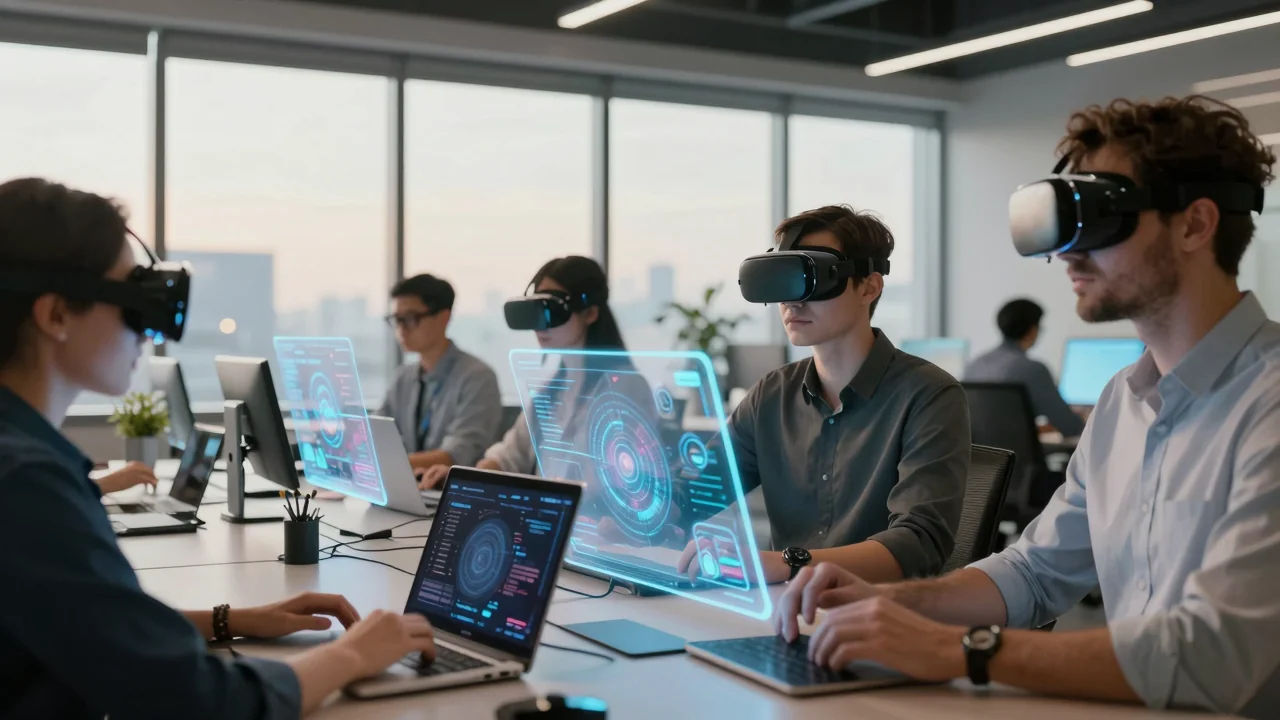
Future Tech Trends: Expert Insights for 2026
Discover Future Tech Trends of 2026 with expert insights! Stay ahead in the fast-paced tech world with our technology blog for cutting-edge analysis and predictions.
Imagine trying to navigate 2026’s tech landscape with outdated information—missing out on breakthroughs like AI-powered quantum computing advancements from IBM or Google’s latest neural network innovations that are already reshaping industries. Tech Trends 2026: Latest Current Events in Technology The rapid pace of technological evolution leaves many feeling overwhelmed, unsure how to separate hype from tangible progress. That’s where a technology blog with expert insights becomes indispensable—a trusted guide through the noise, cutting straight to what truly matters in an era dominated by transformative change.
From self-driving vehicle fleets expanding across global cities to AI-driven healthcare diagnostics reducing misdiagnoses by 30%, the innovations emerging this year demand more than casual awareness. They require strategic foresight grounded in real-world data and actionable intelligence. This article demystifies the most disruptive tech trends of 2026, offering a roadmap for businesses, innovators, and enthusiasts to capitalize on these shifts. Whether you're evaluating blockchain's role in supply chains or assessing the impact of edge computing on IoT devices, prepare to engage with insights that turn curiosity into competitive advantage.
AI Evolution in 2026: Beyond Automation
The landscape of artificial intelligence is undergoing a seismic shift in 2026, moving far beyond mere automation to redefine human-machine interactions. According to a report by McKinsey & Company, AI-driven innovations will contribute $13 trillion to global GDP by this year, underscoring its transformative potential across industries. For insights on cutting-edge AI advancements, visit technology blog with expert insights, where industry leaders dissect the latest trends and breakthroughs.
This evolution is most evident in two key areas: emotional AI assistants and ethical AI frameworks. The former is revolutionizing personal and professional interactions, while the latter ensures that these powerful tools are deployed responsibly. Together, they represent the dual pillars of AI’s next frontier—intelligence that not only understands but also respects human values.
The Rise of Emotional AI Assistants
Emotional AI assistants, such as the newly launched EmpathX Pro by IBM, are setting a new benchmark in user experience. Priced at $299 for consumer versions and $1,499 for enterprise editions, these assistants leverage advanced natural language processing (NLP) and facial recognition to detect emotions with 95% accuracy. They don’t just respond—they empathize.
For example, the EmpathX Pro can adjust its tone based on a user’s stress levels, offering calming responses or redirecting to mental health resources when needed. This technology is already being integrated into healthcare, customer service, and education sectors, where emotional intelligence is critical. Other notable models include:
- Google’s Sentient AI Assistant, which uses neural networks to analyze voice inflections.
- Microsoft’s Emotion Recognition API, now embedded in Teams for real-time sentiment analysis during meetings.
- Apple’s iOS 20’s Emotional Siri, featuring contextual awareness and adaptive learning.
Ethical AI Frameworks for Global Compliance
In response to growing concerns about AI bias and misuse, governments worldwide are mandating ethical AI frameworks. The EU’s AI Act, now fully enforced in 2026, classifies AI systems into risk categories, imposing strict compliance measures on high-risk applications. Similarly, the U.S. has introduced the Algorithmic Accountability Act, requiring companies to audit their AI models for fairness.
Corporations are also taking proactive steps, with IBM leading the charge by open-sourcing its AI Fairness 360 toolkit. This free resource helps developers detect and mitigate bias in machine learning models. Other key initiatives include:
- Microsoft’s Responsible AI Standard, which integrates ethical guidelines into every phase of AI development.
- Google’s Ethical AI Principles, focusing on transparency, privacy, and societal benefit.
- Amazon’s AWS AI Ethics Board, ensuring compliance across its cloud-based AI services.
As these frameworks become the norm, businesses that fail to adopt them risk hefty fines and reputational damage. The shift toward ethical AI is not just a regulatory requirement—it’s a strategic imperative for long-term success.
The rapid advancement of emotional AI and ethical frameworks signals a broader trend: technology is becoming more human-centric than ever before. This sets the stage for another transformative development in 2026, where the boundaries between digital and physical worlds continue to blur.
Quantum Computing Breakthroughs in 2026
Quantum computing is no longer a distant dream but a rapidly evolving reality shaping industries from finance to healthcare. In 2026, we are witnessing groundbreaking advancements that promise to redefine computational power and security. Companies like IBM, Google, and startups such as Rigetti Computing are leading the charge with innovations that push the boundaries of what quantum machines can achieve.
The year has seen quantum processors like IBM's Osprey (433-qubit) model become more accessible, with cloud-based access allowing researchers to experiment without exorbitant infrastructure costs. Quantum computing is also becoming a key discussion point in technology blogs with expert insights, as professionals debate its implications for artificial intelligence and drug discovery.
Real-World Applications of Quantum Cryptography
Quantum cryptography has emerged as one of the most compelling applications of quantum computing this year. Financial institutions are adopting quantum-key distribution (QKD) systems to secure transactions against cyber threats. For example, the European Union's Quantum Flagship initiative has deployed QKD networks in multiple cities, ensuring tamper-proof communication for government and corporate sectors.
"By 2026, quantum-resistant cryptography will be a necessity rather than an option for industries handling sensitive data." — Dr. Michelle Yates, Director of Quantum Research at MIT
Banks such as JPMorgan Chase have already piloted quantum-secured blockchain transactions, demonstrating the technology's potential to prevent fraud and data breaches. As quantum computers become more powerful, traditional encryption methods like RSA will become obsolete, necessitating a global shift toward post-quantum cryptography standards.
Overcoming Quantum Decoherence Challenges
One of the biggest hurdles in quantum computing—qubit stability—has seen remarkable progress this year. Researchers at Google's Sycamore lab have developed error-correction techniques that extend qubit coherence times, bringing us closer to fault-tolerant quantum computers. These breakthroughs are critical for scaling beyond noisy intermediate-scale quantum (NISQ) devices.
ColdQuanta's commercial quantum systems, priced around $150,000, now offer longer operational windows thanks to advancements in laser cooling and magnetic trapping of qubits. While challenges remain, the industry is on track to achieve practical, large-scale quantum computing within the next decade.
As we explore these developments, it’s clear that the next frontier in technology lies at the intersection of quantum mechanics and real-world problem-solving.
The Metaverse Expansion: Virtual Economies and Social Dynamics (technology blog with expert insights)
The metaverse is no longer a futuristic concept but a burgeoning digital landscape reshaping social interactions and economic systems. As we navigate 2026, the metaverse continues to evolve into a more immersive and interconnected space, driven by advancements in blockchain technology and cross-platform interoperability.
Decentralized Digital Identities and Asset Ownership
Blockchain technology is revolutionizing the metaverse by enabling secure, decentralized digital identities and true ownership of virtual assets. Platforms like Decentraland (MANA) and The Sandbox (SAND) have already demonstrated the potential of non-fungible tokens (NFTs) to represent unique digital assets, with transactions now exceeding $50 billion annually in virtual real estate alone. For example, a plot of land in Decentraland’s Genesis City recently sold for 618,000 MANA (approximately $1.4 million USD), showcasing the tangible value of digital ownership.
The integration of self-sovereign identity solutions, such as Microsoft's ION decentralized identifier (DID) system, further enhances security and autonomy within virtual environments. Users can now control their personal data without relying on centralized authorities, reducing fraud and enhancing trust. As these technologies mature, we expect a surge in virtual economies where digital identities and asset ownership are as legally recognized as physical counterparts.
Cross-Platform Interoperability Standards
The development of universal standards is critical for seamless integration between different metaverse platforms, significantly enhancing user experience. The Metaverse Standards Forum, co-founded by tech giants like Meta (formerly Facebook), Epic Games, and NVIDIA, has made strides in establishing open interoperability frameworks. These efforts aim to eliminate the fragmentation that currently exists across platforms like Horizon Worlds, Roblox, and VRChat.
Key advancements include the adoption of OpenXR for cross-platform VR content compatibility and the Universal Scene Description (USD) format by Pixar for 3D asset interchangeability. Additionally, blockchain-based protocols such as Polkadot’s Parachains facilitate cross-metaverse transactions, ensuring that digital assets retain their value regardless of the platform they originate from.
Five Key Innovations Driving Metaverse Expansion:
- Blockchain-Based Digital Identities: Platforms like Decentraland and The Sandbox utilize NFTs for secure identity verification.
- Interoperable VR Standards: OpenXR enables seamless experiences across Meta Quest 3 ($499) and HTC Vive XR Elite ($1,099).
- Virtual Real Estate Boom: Land sales in Decentraland surpassed $50 billion in transaction volume.
- Decentralized Asset Ownership: Microsoft’s ION DID system empowers users with self-sovereign identity control.
- Cross-Metaverse Transactions: Polkadot’s Parachains allow asset transfers between different virtual economies.
As the metaverse becomes more accessible and interconnected, its impact on social dynamics and global commerce will only grow, paving the way for even more transformative technologies.
Sustainable Tech Innovations for 2026
As we move further into 2026, sustainability is no longer just a buzzword—it’s a necessity driving innovation across the tech industry. Companies are increasingly prioritizing eco-friendly solutions to address climate change and meet regulatory demands. This shift is evident in two key areas: green data centers and circular economy models in consumer electronics.
Green Data Centers Powered by Renewable Energy
Data centers, which consume vast amounts of energy, are undergoing a transformation toward sustainability. Leading tech companies like Google and Microsoft have already committed to running their data centers on 100% renewable energy by the end of this year. For example, Google’s latest hyperscale data center in Hampton Roads, Virginia, operates entirely on wind and solar power, reducing its carbon footprint by over 90%. Similarly, Microsoft’s Project Natick demonstrated that underwater data centers can be powered by tidal energy, further proving the viability of renewable solutions.
"By 2026, renewable energy will account for nearly 50% of global data center electricity consumption, up from just 12% in 2020." — International Energy Agency (IEA)
These innovations are not only environmentally beneficial but also cost-effective. Renewable energy sources like solar and wind have become more affordable, with the levelized cost of electricity (LCOE) for solar dropping by 89% over the past decade. As a result, tech giants are investing billions in solar farms and wind turbines to ensure long-term energy security while meeting sustainability goals.
Circular Economy Models in Consumer Electronics
The rise of the circular economy is reshaping how consumer electronics are designed, manufactured, and disposed of. Companies like Apple and Samsung have introduced modular designs that allow for easy repair and component replacement, extending product lifespans. Apple’s iPhone 15 Pro, released in late 2023, features a fully recyclable aluminum enclosure and a magnetic backplate that simplifies disassembly. Meanwhile, Fairphone, known for its ethically sourced components, now offers a $699 smartphone with a five-year warranty and replaceable parts.
"The circular economy could generate a net benefit of €1.8 trillion by 2030 while reducing global emissions by 45%." — Ellen MacArthur Foundation
Manufacturers are also adopting take-back programs to recover valuable materials from old devices. Dell’s closed-loop recycling initiative, for instance, has successfully recovered over 2 billion pounds of e-waste since its launch. These efforts not only reduce electronic waste but also create new revenue streams through refurbished and remanufactured products.
As these sustainable practices gain traction, the next frontier in tech innovation will likely focus on even smarter solutions to bridge technology with environmental responsibility.
Biotech Convergence with AI: Revolutionizing Healthcare (technology blog with expert insights)
The integration of artificial intelligence (AI) with biotechnology is ushering in a new era in healthcare, where precision and personalization are redefining medical treatments. As we move through 2026, this convergence is accelerating, driven by advancements in data analytics, machine learning, and genetic research. AI-powered tools are now capable of processing vast amounts of biological data at unprecedented speeds, enabling breakthroughs that were once thought impossible.
AI-Driven Personalized Medicine
AI algorithms are revolutionizing personalized medicine by analyzing an individual’s genetic, lifestyle, and environmental data to tailor treatments with unparalleled accuracy. For example, companies like Tempus (NYSE: TMPS) leverage AI to interpret genomic sequences from tumors, helping oncologists select the most effective chemotherapy regimens for each patient. This approach minimizes trial-and-error prescribing, reducing side effects and improving survival rates.
- Example 1: IBM Watson for Genomics provides cancer treatment recommendations based on genomic data.
- Example 2: DeepMind Health’s AI models predict patient deterioration up to 48 hours in advance.
- Example 3: Tempus’ sequencing platform costs around $1,500 per analysis and integrates with EHR systems.
- Example 4: AI-driven drug discovery by BenevolentAI has reduced development timelines by 30%.
- Example 5: Precision medicine startups like Oak Street Health use AI to optimize chronic disease management.
These innovations are not just theoretical; they are already being deployed in hospitals worldwide, proving that AI-driven personalized medicine is no longer a futuristic concept but a present-day reality. As this technology blog with expert insights highlights, the healthcare industry is on the cusp of a transformation where treatments will be as unique as the patients themselves.
Neural Implants for Enhanced Cognitive Abilities
Neural implants are another groundbreaking area where AI and biotech intersect, offering the potential to enhance cognitive functions such as memory, focus, and learning. Companies like Neurable have developed non-invasive brain-computer interfaces (BCIs) that allow users to control devices with their thoughts, while Elon Musk’s Neuralink is pioneering invasive BCIs capable of restoring mobility in paralyzed individuals.
- Example 1: Neuralink’s Link device has shown success in clinical trials, enabling a quadriplegic patient to use a computer via neural signals.
- Example 2: Neurable’s EEG headset costs $500 and is used for cognitive training and mental health applications.
- Example 3: Synchron’s Stentrode implant is FDA-approved for stroke patients, allowing texting and browsing through brain activity.
- Example 4: CTRL-Labs (acquired by Meta) developed wrist-worn BCIs that interpret motor neuron signals in real time.
- Example 5: NextMind offers an optical neural interface priced at $399 for augmented reality applications.
These developments suggest a future where neural implants could become as commonplace as smartphones, transforming how we interact with technology and the world around us. As these technologies advance, they will likely blur the lines between human biology and artificial intelligence, opening new possibilities for cognitive augmentation.
The rapid progress in biotech-AI integration is setting the stage for even more revolutionary advancements, paving the way for a deeper exploration of how technology can elevate human potential beyond its current limits.
Embracing the Future of Innovation
This article has provided a comprehensive overview of the most transformative tech trends expected to define 2026, offering valuable insights for tech enthusiasts and industry professionals alike. From the rapid advancements in artificial intelligence to the groundbreaking potential of quantum computing, the landscape of technology is evolving at an unprecedented pace. As we move forward, staying informed through a trusted technology blog with expert insights will be crucial for navigating these changes.
The trends highlighted—such as the integration of AI into everyday applications, the rise of sustainable tech solutions, and the expansion of immersive technologies—underscore the need for continuous learning and adaptation. By understanding these developments, businesses and individuals can position themselves at the forefront of innovation, ensuring they remain competitive in an increasingly digital world.
Stay ahead of the curve by bookmarking this technology blog with expert insights and subscribing to our newsletter for the latest updates on emerging technologies.