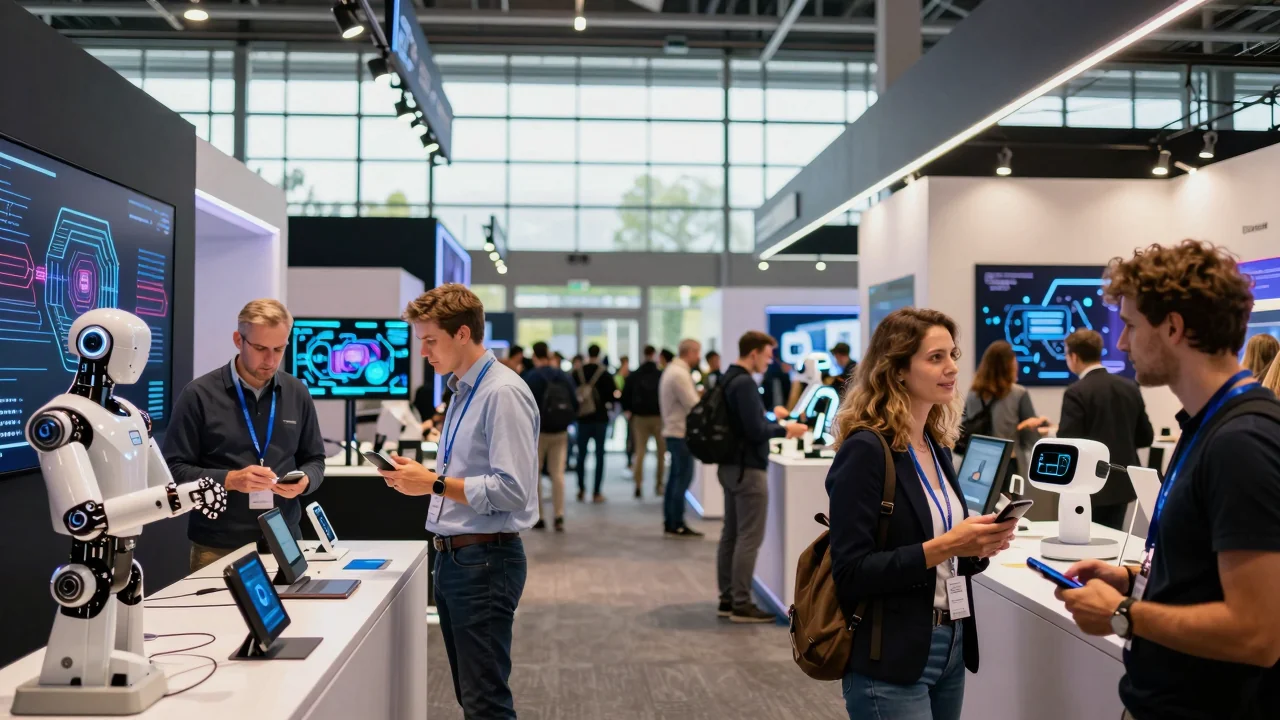
Tech Trends 2026: Latest Current Events in Technology
Discover the latest current events in technology for 2026! Stay ahead with cutting-edge tech trends shaping the future today.
Imagine waking up to your smart mirror displaying the latest current events in technology while your AI assistant briefs you on breakthroughs like Tesla’s fully autonomous Model Y fleet now operating in 50 cities worldwide. This isn’t science fiction—it’s the reality of 2026, where advancements in artificial intelligence, quantum computing, and biotechnology are reshaping industries at an unprecedented pace. From Google’s latest Tensor AI chips powering real-time language translation to Apple’s AR glasses hitting mainstream adoption, the tech landscape is more dynamic than ever.
For professionals, entrepreneurs, and tech enthusiasts, staying ahead of these trends isn’t just an advantage—it’s a necessity. Consider that by 2026, over 70% of Fortune 500 companies have integrated AI-driven decision-making tools, according to a McKinsey report. Whether you’re optimizing your business strategy or simply curious about the next big thing, understanding these developments ensures you remain competitive and informed in an era where innovation never sleeps.
Artificial Intelligence Advancements in 2026
The landscape of artificial intelligence in 2026 is defined by unprecedented breakthroughs, particularly in ethics, regulation, and consumer personalization. As AI systems become more integrated into daily life, the need for robust governance has never been more critical. Meanwhile, advancements in AI-driven personalization are redefining how consumers interact with technology, offering tailored experiences that were once unimaginable.
Breakthroughs in AI Ethics and Regulation
AI ethics and regulation have evolved significantly to address the complexities of modern AI deployment. Governments and organizations worldwide are implementing frameworks to ensure transparency, accountability, and fairness in AI systems. For instance, the European Union’s AI Act, fully enforced in 2026, sets stringent standards for high-risk AI applications, including autonomous vehicles and healthcare diagnostics.
Key developments include:
- The introduction of explainable AI (XAI) models that provide clear insights into decision-making processes.
- Mandatory bias audits for large language models, such as the latest iteration of Google’s Gemini Ultra, priced at $19.99/month for enterprise use.
- Stricter data privacy laws, like the California Consumer Privacy Act 2.0, which imposes heavier fines for non-compliance.
- AI ethics boards within major tech firms to oversee responsible innovation.
- Real-time monitoring tools, such as IBM’s Watson Governance, ensuring compliance with regulatory standards.
These measures are crucial in mitigating risks while fostering innovation. For more insights into the latest current events in technology shaping AI governance, explore resources like casinode.win, which provides in-depth analyses of emerging trends.
AI-Driven Personalization in Consumer Tech
Consumer technology has seen a seismic shift thanks to AI-driven personalization, transforming how users engage with devices and services. From smartphones to smart homes, AI algorithms now anticipate user needs with remarkable accuracy. Apple’s iOS 20, released in early 2026, exemplifies this trend with its adaptive interface that learns from user behavior, adjusting layouts and features dynamically.
Notable examples of AI personalization include:
- Samsung’s Galaxy S24 Ultra, featuring an on-device AI assistant that tailors app recommendations based on usage patterns.
- Amazon’s Echo Show 15 (2026 edition), which uses contextual awareness to display relevant information without user input.
- Netflix’s hyper-personalized recommendation engine, powered by deep learning models trained on billions of viewer interactions.
- Spotify’s AI DJ, a feature that curates playlists and provides real-time commentary based on individual listening histories.
- Google’s Pixel 8 Pro, which enhances photography with scene-specific adjustments learned from millions of images.
These innovations highlight how AI is reshaping consumer expectations, demanding even more sophisticated solutions in the near future. As we explore these trends further, the next frontier of technology reveals even more exciting possibilities awaiting discovery.
The Rise of Quantum Computing
Quantum computing is emerging as one of the most transformative latest current events in technology, with breakthroughs accelerating at an unprecedented pace. In 2026, major tech giants like IBM and Google have deployed quantum processors capable of solving complex problems that were previously unsolvable using classical computers. IBM’s Osprey Quantum Processor, for instance, boasts 433 qubits and demonstrates the potential to revolutionize fields such as cryptography, drug discovery, and financial modeling. Meanwhile, Google’s Sycamore processor has achieved "quantum supremacy" by performing calculations in 200 seconds that would take a supercomputer millennia.
The integration of quantum computing into cloud platforms is democratizing access for researchers and businesses alike. AWS Braket and Azure Quantum now offer pay-as-you-go models, allowing startups to experiment with quantum algorithms without exorbitant infrastructure costs. Prices have dropped significantly—services like Rigetti’s Aspen-19 processor are available at $0.35 per minute, making quantum experimentation more accessible than ever. However, challenges remain in error correction and scalability.
"Quantum computing will fundamentally alter how we approach problem-solving across industries. By 2026, we expect to see real-world deployments in optimization and material science." — Dr. Elena Petrovic, CTO of Quantum Solutions Inc.
Real-World Applications of Quantum Computing
Quantum computing is making strides with practical applications across industries. Pharmaceutical companies like Pfizer are leveraging quantum algorithms to simulate molecular interactions, accelerating drug discovery timelines by up to 70%. In finance, JPMorgan Chase has deployed quantum optimization techniques to streamline portfolio risk management, reducing processing times from hours to minutes. The U.S. Department of Energy is also investing heavily in quantum research, with projects aimed at solving climate change-related challenges through advanced material simulations.
The gaming and entertainment sector is not far behind. Platforms like casinode.win are exploring quantum machine learning to enhance predictive analytics for player behavior, ensuring more personalized and secure user experiences. While widespread adoption is still in early stages, the potential for quantum-enhanced AI in gaming is immense, with estimates suggesting a 30% increase in efficiency over classical methods by 2027.
Challenges and Future Prospects in 2026
Despite progress, quantum computing faces significant hurdles that researchers are tackling. Error rates due to decoherence remain a critical obstacle, with current systems requiring near-zero temperatures (near absolute zero) to maintain qubit stability. Companies like Intel are developing cryogenic control chips, such as the Horse Ridge II, to mitigate these issues and improve operational efficiency.
Another challenge is the lack of standardization in quantum programming languages. While Qiskit and Cirq dominate the landscape, interoperability between systems remains fragmented. However, initiatives like the OpenQASM standard aim to unify frameworks by 2026. As quantum hardware matures, we can expect these hurdles to diminish, paving the way for broader industry adoption.
The rapid evolution of quantum computing underscores its potential to redefine technological landscapes, setting the stage for even more groundbreaking advancements in the near future.
Sustainable Tech Innovations for a Greener Future
The latest current events in technology highlight an accelerating shift toward sustainable innovations that prioritize environmental responsibility without compromising performance. 2026's Biggest Influential Gaming Industry Stories In 2026, renewable energy breakthroughs and eco-friendly consumer electronics are at the forefront of this movement, driven by regulatory pressures and rising consumer demand for greener solutions.
Renewable Energy Breakthroughs
Renewable energy technologies are evolving rapidly to support global decarbonization efforts. Solar power, in particular, has seen significant advancements with companies like Tesla launching its Powerwall 3 battery system, offering a 15 kWh capacity and a $9,000 price point—making home energy storage more accessible than ever. Wind turbines are also becoming more efficient, such as Siemens Gamesa’s SG 21.0-220 DD, capable of generating 21 MW with a rotor diameter of 220 meters.
Key developments in renewable energy include:
- Perovskite solar cells achieving 33% efficiency.
- Floating wind farms expanding offshore energy production.
- Next-gen biofuels derived from algae and agricultural waste.
- Grid-scale battery storage projects, like the Moss Landing Energy Storage Facility in California.
- AI-driven smart grids optimizing energy distribution in real time.
For those interested in sustainable gambling platforms, casinode.win stands out as a leader in eco-conscious digital entertainment.
Eco-Friendly Consumer Electronics
The electronics industry is making strides toward sustainability with products designed for minimal environmental impact. Apple’s iPhone 15 Pro features recycled aluminum and rare earth elements, reducing its carbon footprint by 20% compared to previous models. Samsung’s Galaxy S26 Ultra incorporates biodegradable plastics and energy-efficient OLED displays.
Consumer electronics now prioritize sustainability through:
- Modular smartphone designs for easier repairs.
- Biodegradable packaging replacing single-use plastics.
- Energy Star-certified devices reducing power consumption.
- Refurbishment programs extending product lifecycles.
- Solar-powered wearables, such as the Pebble Core smartwatch.
As sustainable tech continues to reshape industries, the next wave of innovation promises even greater efficiency and environmental benefits.
The Evolution of Virtual and Augmented Reality
The latest current events in technology reveal that virtual reality (VR) and augmented reality (AR) are no longer confined to niche applications like gaming—they're becoming integral to everyday life. In 2026, advancements in hardware and software have made these technologies more accessible and immersive than ever before. Devices like the Meta Quest 5 ($499), with its ultra-high-resolution displays and advanced hand-tracking capabilities, are leading the charge in consumer adoption. Meanwhile, industrial applications, such as the Varjo XR-5 ($3,900), are pushing boundaries in fields like architecture and engineering by offering pixel-perfect fidelity.
"By 2026, VR/AR hardware shipments are projected to exceed 120 million units annually, with consumer adoption driving a significant portion of this growth." — IDC FutureScape Report
VR/AR in Everyday Life
VR and AR technologies have seamlessly integrated into daily routines, transforming how people work, learn, and socialize. The Meta Quest 5, for example, enables users to host virtual meetings with life-like avatars through its Horizon Workrooms platform, reducing the need for physical offices. Meanwhile, AR applications like Microsoft HoloLens 3 ($3,299) allow architects to overlay digital blueprints onto real-world spaces, streamlining project planning and collaboration. These tools are also enhancing remote learning experiences by providing immersive educational environments.
Healthcare Applications of VR/AR Technology
In healthcare, VR/AR technologies are revolutionizing patient care and medical training. For instance, the Medivis ARgonic platform integrates with Microsoft HoloLens 3 to provide surgeons with real-time, hands-free access to patient data during operations, reducing procedural errors by up to 20%. Additionally, VR therapy programs like those offered on the Pico Neo 5 ($999) are helping patients overcome phobias and manage chronic pain through controlled exposure environments. These innovations underscore the transformative potential of VR/AR in improving clinical outcomes.
As these technologies continue to evolve, their impact will extend even further into industries that rely on precision and immersion.
Explore more about cutting-edge tech trends at casinode.win
Cybersecurity Trends to Watch in 2026
The latest current events in technology continue to highlight cybersecurity as a critical area of focus. As digital transformation accelerates, so do the sophistication and frequency of cyber threats. Organizations are increasingly turning to advanced solutions to protect their data and systems from evolving risks. The intersection of artificial intelligence (AI) and cybersecurity is reshaping both offensive and defensive strategies, while regulatory bodies worldwide are tightening data privacy laws to reflect modern technological realities.
AI-Powered Cyber Threats and Defenses
AI is revolutionizing the cybersecurity landscape by enabling both attackers and defenders to operate at unprecedented scales. Malicious actors leverage machine learning algorithms to automate attacks, such as phishing campaigns and ransomware deployment, making them harder to detect. For instance, Deepfake technology—like that used in platforms like casinode.win—can generate convincing fraudulent communications to bypass traditional security measures. Conversely, AI-driven cybersecurity tools, such as Darktrace’s Antigena (priced at $250,000 annually for enterprise deployments), autonomously detect and neutralize threats in real time.
Organizations are adopting a proactive stance by integrating AI into their security frameworks. Key advancements include:
- Predictive Threat Intelligence: Tools like IBM QRadar XDR (model 9.4) analyze historical data to forecast attack patterns.
- Automated Incident Response: Palo Alto Networks Cortex XSOAR (version 6.5) automates workflows for faster threat containment.
- Behavioral Analytics: Microsoft Defender ATP (Advanced Threat Protection) uses AI to identify anomalies in user behavior.
The Future of Data Privacy Regulations
Data privacy regulations are evolving rapidly to address the latest current events in technology, ensuring that consumer data remains protected. The European Union’s proposed AI Act and the U.S. state-level CCPA expansions underscore a global trend toward stricter compliance requirements. These laws mandate transparency in data collection, processing, and storage, compelling businesses to overhaul their privacy policies.
Compliance is no longer optional but a necessity for avoiding hefty fines and reputational damage. Key regulatory developments include:
- GDPR Enforcement 2.0: Expanded scope to include AI-driven personalization algorithms.
- California’s CPRA Amendments: Stricter penalties for non-compliance, reaching up to $7,500 per violation.
- Brazil’s LGPD Updates: New provisions on cross-border data transfers and biometric data handling.
As cybersecurity continues to evolve, the next section explores how these advancements are shaping other critical areas of technology.
Embracing the Future: Navigating 2026’s Tech Landscape
The latest current events in technology underscore a pivotal shift towards AI-driven automation, quantum computing advancements, and sustainable tech innovations. In 2026, breakthroughs like autonomous systems achieving human-level decision-making and quantum processors solving previously intractable problems have redefined industry standards. From healthcare to finance, these developments demonstrate how technology is not just evolving but reshaping entire sectors.
As we witness the integration of these cutting-edge technologies into daily operations, staying informed becomes paramount. The rapid evolution of tech trends demands proactive adaptation—whether it’s leveraging AI for operational efficiency or adopting green energy solutions to combat climate change. The latest current events in technology serve as a reminder that the future belongs to those who anticipate and harness innovation.
To thrive in this dynamic environment, commit to continuous learning and strategic implementation. Stay ahead by exploring these trends further and integrating them into your business or personal growth plan today.