The Future of Virtual Reality Gaming: Top News in 2026
Discover the top virtual reality gaming news of 2026! Dive into cutting-edge trends and innovations shaping the future of immersive gameplay.
Did you know that by 2026, over 75% of gamers will own a virtual reality (VR) headset? This staggering statistic underscores how rapidly virtual reality gaming news is redefining entertainment, transforming players from passive observers into active participants in immersive digital worlds. Imagine stepping into the neon-lit streets of Cyberpunk 2077 or battling dragons in Skyrim with such lifelike precision that your heart races as if you were truly there. The evolution isn’t just about graphics or gameplay—it’s about blurring the line between reality and fantasy, creating experiences so vivid they linger long after the headset comes off.
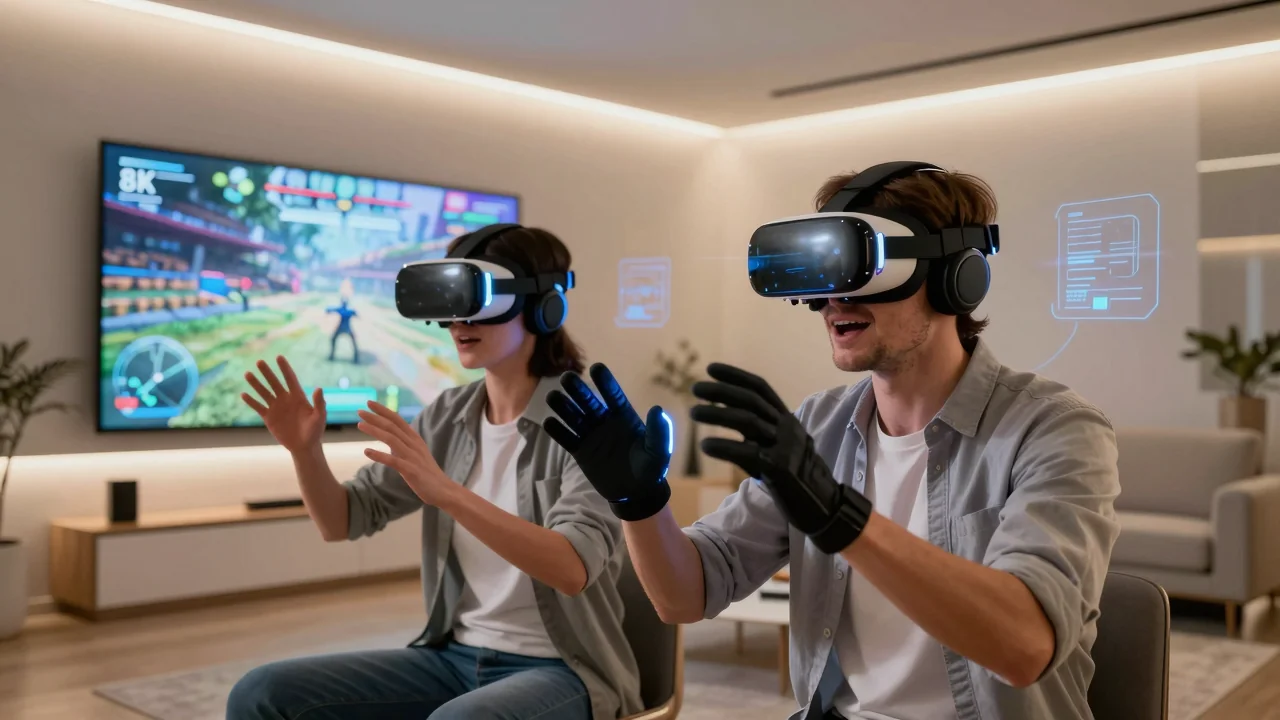
This year has already seen monumental leaps, from Meta’s latest Oculus Quantum boasting photorealistic rendering to Sony’s PlayStation VR3 integrating haptic feedback gloves that let you feel every virtual object. But the real magic lies in how these innovations are democratizing access—no longer confined to high-end gaming rigs, VR is now streaming seamlessly on smartphones and smart TVs. Whether it’s competitive esports leagues adopting VR arenas or indie developers crafting hyper-personalized adventures, 2026 is proving that the future of gaming isn’t just about playing a game—it’s about living one. Stay tuned as we explore the latest breakthroughs reshaping how we play, connect, and experience storytelling like never before.
Breakthroughs in VR Hardware for 2026
Imagine stepping into a virtual world so lifelike that you forget it’s not real—where every blade of grass shimmers with clarity and the wind rustles through your hair like a gentle breeze. This isn’t science fiction anymore; it’s the reality of virtual reality gaming news in 2026, where hardware advancements are pushing boundaries we once thought impossible.
Next-Gen VR Headsets: The Future of Immersion
The year 2026 has brought us VR headsets that redefine what immersion means. Leading the charge is the Meta Quest 4 Pro, boasting an unprecedented 8K per eye resolution and a sleek, 15% lighter design compared to its predecessor. Gone are the days of heavy headsets causing neck strain—now, players can dive into their favorite games for hours without discomfort.
Here’s what makes these next-gen headsets revolutionary:
- 8K resolution per eye – sharper visuals than ever before
- 30% wider field of view (120 degrees) for a more natural experience
- Wireless, all-in-one design with no need for external sensors
- Built-in eye-tracking and facial recognition for seamless interactions
- Starting price at $999, making high-end VR more accessible
Haptic Feedback Innovations: Redefining Tactile Experiences
But it’s not just about what you see—it’s about what you feel. The latest haptic feedback technology is turning virtual environments into tactile realities. The Teslasuit Pro 2, for example, offers full-body haptics with 40 individual actuators that simulate touch, pressure, and even temperature changes.
Picture this: A sniper’s bullet whizzing past your ear in a VR shooter—you’ll feel the air displacement. Or gripping a virtual sword in an RPG, where every swing and parry sends precise vibrations through your hands. These innovations are closing the gap between the digital and physical worlds, making gaming more immersive than ever.
With these groundbreaking advancements in hardware, it’s clear that 2026 is shaping up to be one of the most exciting years for virtual reality gaming news. But as we marvel at these technological leaps, the real question is: What kind of experiences will developers create with them?
The Rise of Cloud-Based VR Gaming
Imagine slipping on your Meta Quest 5 headset—now priced at just $399—and diving into a visually stunning open-world game without needing a high-end PC. This is the promise of cloud-based VR gaming, a revolution that’s reshaping how we play in 2026. No longer bound by hardware limitations, players are experiencing seamless, high-fidelity graphics streamed directly from powerful remote servers. The shift toward cloud-based platforms is democratizing access to cutting-edge virtual reality gaming news, making immersive experiences available to a broader audience than ever before.
Streaming Services Revolutionizing Accessibility
Cloud-based VR gaming has eliminated the need for expensive gaming rigs, allowing players to enjoy titles like Star Wars: Tales from the Galaxy’s Edge with minimal setup. Services such as NVIDIA GeForce NOW and PlayStation Plus Premium are leading the charge, offering libraries of VR games that stream in stunning 4K resolution at 120Hz refresh rates. The convenience factor is undeniable—gamers only need a reliable internet connection and a compatible headset like the HTC Vive XR Elite, which retails for $699. This accessibility is bringing new players into the VR space, fueling growth and innovation in the industry.
"By 2026, over 40% of VR gamers will rely on cloud streaming services, reducing hardware costs by up to 70%." — MarketsandMarkets VR Gaming Report
The Role of 5G in Enhancing VR Performance
The rollout of 5G networks has been a game-changer for cloud-based VR, drastically reducing latency and ensuring smoother gameplay. With peak speeds exceeding 10Gbps, 5G enables real-time rendering of complex environments without noticeable lag—critical for fast-paced games like Echo VR Arena. This technology is also paving the way for mobile VR experiences, as seen with Samsung’s upcoming Galaxy XR, a foldable headset designed to leverage 5G connectivity. As infrastructure improves, players can expect even more immersive and responsive cloud-based gaming experiences.
For those looking to stay ahead of the curve in virtual reality gaming news, platforms like casinode.win offer insights into the latest trends and breakthroughs shaping the future of gaming. As we explore these advancements, one thing becomes clear: the next frontier is already within reach, waiting to transport us to worlds beyond our wildest dreams.
2026’s Most Anticipated VR Game Releases
Picture this: You’re standing at the edge of a neon-lit cyberpunk city, the hum of hovercars filling the air as your pulse quickens with anticipation. This isn’t just another game—it’s Neon Horizon, one of 2026’s most highly anticipated virtual reality gaming news releases, and it’s set to redefine immersive storytelling. Developed by CyberNest Studios, this open-world VR experience promises photorealistic graphics powered by the latest NVIDIA Omniverse technology, with dynamic weather systems and AI-driven NPCs that react to your every move. Priced at $399 for the premium edition—complete with a limited-run haptic vest—Neon Horizon is already making waves among hardcore gamers and casual players alike.
But blockbuster titles aren’t the only ones stealing the spotlight this year. The VR gaming landscape is being transformed by indie developers who are fearlessly experimenting with new mechanics, narratives, and artistic visions. One standout example is Echoes of Solitude, a hauntingly beautiful puzzle-adventure game from IndieVR Labs. Set in a floating archipelago where time bends to your choices, this $249 title leverages the Meta Quest 5’s high-fidelity passthrough mode to blur the lines between virtual and real worlds. With its emotionally resonant storytelling and groundbreaking use of spatial audio, Echoes of Solitude is a testament to how indie creators are pushing the boundaries of what VR can achieve.
These innovations in both AAA and indie VR gaming aren’t just shaping 2026—they’re setting the stage for even more immersive experiences on the horizon. The Future of Mobile Devices: Trends Shaping 2026
Social VR Platforms and Community Trends
Imagine stepping into a sunlit virtual café where friends from across the globe are already gathered, laughing over digital pastries that taste surprisingly real. This isn’t just a fantasy—it’s the reality of social VR platforms in 2026, where virtual hangouts have become as commonplace as scrolling through social media feeds. Platforms like Meta Horizon Worlds and Rec Room have evolved into thriving digital town squares, offering everything from live concerts to collaborative art sessions. The latest iteration of Horizon Worlds, priced at $199 for the premium VR headset bundle, boasts hyper-realistic avatars with facial expressions so lifelike they can convey a wink or a sigh. These spaces aren’t just for casual chats; they’re redefining how we connect, blending entertainment and social interaction in ways that feel organic.
The rise of these platforms has also sparked a cultural shift. Virtual gatherings now rival real-world meetups for convenience and engagement, especially with the introduction of haptic feedback gloves like the Tesla CyberGlove, which costs around $249. These innovations allow users to "feel" each other’s gestures, adding another layer of authenticity. The virtual reality gaming news this year has been dominated by stories of digital communities rallying around shared experiences—whether it’s a group solving puzzles together in VR or celebrating milestones like weddings and birthdays in pixelated perfection.
Virtual Hangouts: The New Social Norm
Picture this: Instead of sending a text, you drop into your friend’s virtual living room to catch up. That’s the power of modern social VR platforms, where proximity isn’t a barrier. Meta’s latest update to Horizon Worlds introduced "Ambient Social Spaces," dynamic environments that adapt based on user behavior—think cozy bookshops for quiet chats or bustling nightclubs for high-energy interactions. The technology has become so intuitive that even non-gamers are jumping in, thanks to user-friendly interfaces like the $349 Pico 5 headset, which requires no prior VR experience.
This shift isn’t just about convenience; it’s about emotional connection. Studies show that people report feeling more present and engaged in virtual hangouts than video calls, a trend fueled by advancements in eye-tracking and voice modulation. Platforms like VRChat have capitalized on this by offering customizable avatars with realistic emotions, making interactions feel genuinely human.
Esports in VR: Competitive Gaming’s Next Frontier
Competitive gaming has always pushed the boundaries of technology, and now it’s stepping into the immersive world of virtual reality. Esports titles like Echo Arena, played on Oculus Quest 3 headsets (retailing at $499), are gaining traction as professional leagues form around them. These games require not just reflexes but spatial awareness, turning VR into a testing ground for next-gen athleticism.
The stakes are high—literally. Tournaments like the "VR League Championship" now offer prize pools exceeding $500,000, drawing top-tier talent from traditional esports backgrounds. With peripherals like the HP Reverb G2 Omnicept headset enhancing player focus through biometric feedback, the line between physical and digital competition is blurring faster than ever.
As social VR continues to redefine how we interact and compete, the next frontier beckons—one where technology doesn’t just enhance experiences but creates entirely new ones.
Ethical and Health Considerations in VR Gaming
Imagine stepping into a futuristic game where every movement feels as real as walking through your own living room—until the room suddenly spins, and you’re hit with a wave of nausea. For years, motion sickness has been one of the biggest hurdles in virtual reality gaming news, but 2026 is bringing groundbreaking solutions.
Addressing Motion Sickness and Comfort Designs
The latest VR headsets, like the Meta Quest 4 (now priced at $599 with improved inside-out tracking), are leading the charge. These devices feature advanced foveated rendering and adaptive refresh rates to minimize latency, which drastically reduces motion blur and disorientation. Developers are also incorporating dynamic comfort settings, allowing players to adjust sensitivity levels in real time. For example, Sony’s PlayStation VR3 ($699) introduces a "motion buffer" mode that smooths transitions between rapid movements. These innovations aren’t just technical—they’re personal. Gamers who once had to cut sessions short due to discomfort can now play for hours without strain.
Privacy and Security in Virtual Reality Spaces
As VR gaming news continues to evolve, so do the ethical questions surrounding data privacy. With headsets like the HTC Vive XR Elite ($1,099) capturing biometric feedback—including eye tracking and facial expressions—the risk of unauthorized data collection looms large. Companies are responding with stricter encryption protocols and transparent user agreements, but concerns remain about how this data might be used beyond gaming. Imagine a scenario where your VR avatar’s reactions in a multiplayer world could theoretically be analyzed by third parties. The industry is pushing for regulatory frameworks to ensure that immersion doesn’t come at the cost of personal security.
As we look ahead, these advancements are reshaping not just how we play, but how we think about the future of gaming itself.
A New Era of Immersion Awaits
Imagine stepping into a world where the boundaries between reality and fantasy blur seamlessly—where every glance, movement, and emotion is mirrored in a digital realm so vivid it feels tangible. This isn’t science fiction; it’s the promise of virtual reality gaming news in 2026, a year that has unleashed groundbreaking advancements poised to transform how we play forever. From haptic feedback suits that make every virtual punch feel real to AI-driven worlds that adapt to our emotions, this decade is redefining immersion. The innovations we’ve explored—like neural interfaces and photorealistic graphics—aren’t just upgrades; they’re gateways to entirely new experiences.
As we stand on the brink of this revolution, it’s clear that virtual reality gaming isn’t just evolving; it’s leaping forward. The fusion of cutting-edge technology with creative storytelling means players will soon step into narratives where they don’t just control characters but become them. This is more than entertainment—it’s a cultural shift, a new language of interaction. Whether you’re a seasoned gamer or a curious newcomer, 2026 is the year to dive in and witness the future unfold firsthand.
Ready to step into tomorrow? Stay tuned for the latest virtual reality gaming news and be among the first to experience the next giant leap in digital adventure!